The map cannot be displayed because you have not yet agreed to the use of GoogleMaps.
You can find the GoogleMaps privacy policy at https://policies.google.com/privacy?hl=en-US
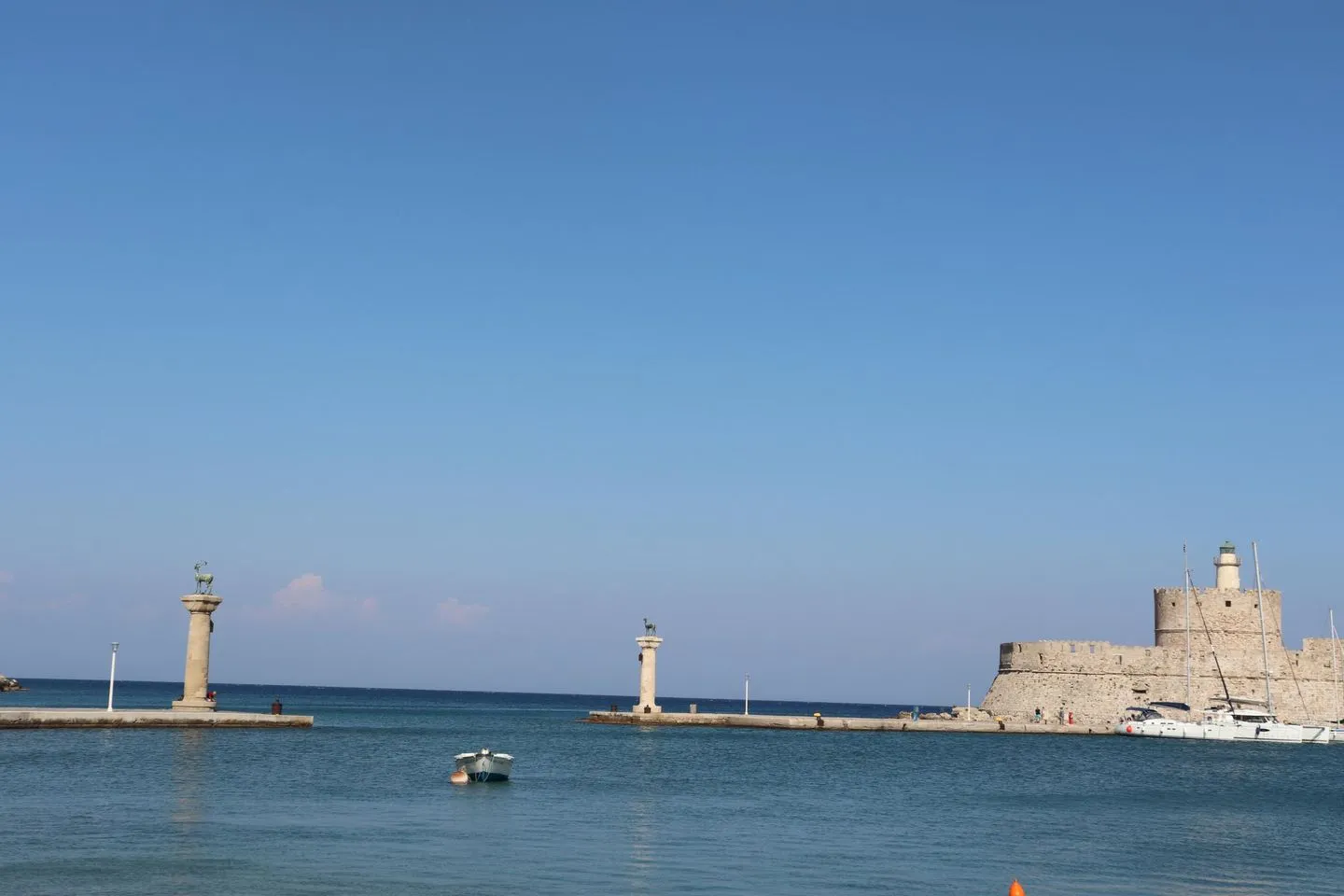
The island belongs to the Dodecanese, an island group northeast of Crete in the southern Aegean Sea. It has around 115,000 inhabitants and is the fourth largest island in Greece. Rhodes means “Island of Roses” or “Island of Pomegranates” and in ancient times was considered the favorite island of the sun god Helios, as Rhodes enjoys more than 320 days of sunshine per year. The green island of Rhodes, with its long beaches and charming towns, has been an integral part of the international tourism scene for decades. Vibrant holiday resorts and traditional villages, endless beaches and idyllic bays, archaeological treasures and artistic highlights – the island has many fascinating faces. Rhodes captivates visitors with secluded coves, fairy-tale sandy beaches and lonely mountain forests perfect for hiking. The protected village of Lindos stretches picture-perfect beneath the ancient Acropolis. Another romantic jewel is the Old Town of the island’s capital, surrounded by mighty walls and gates dating back to the Crusader era. Hardly anyone can resist the charm of its narrow streets and medieval buildings. The fascinating medieval city of Rhodes is a UNESCO World Heritage Site.
For more than two centuries (1319–1522), the Crusaders ruled the island. Afterwards, Rhodes remained under Ottoman rule for more than four centuries until 1912 and was called Rodos. From 1912 to 1943 it remained under Italian rule and was known as Rodhini. After World War II, Rhodes and the entire Dodecanese initially became a protectorate under British supervision. In 1947 they were united with the Kingdom of Greece. The architecture of the island draws inspiration from many different eras and cultures. Entering Rhodes Town feels like stepping back in time. Memories of antiquity blend with Byzantine and Crusader influences, while modern life pulses between all these historical landmarks.
The approximately 80 km long island is only highly touristic in the far north around Faliraki. In contrast, the southern coasts remain less developed, quieter and more authentic. The island’s 200 km coastline mainly consists of flat sandy beaches interrupted by steep cliffs. Rhodes is predominantly mountainous, with small plains, gorges, valleys and plateaus. The interior landscape is characterized by mountains and pine forests. The highest mountain is Attavyros at 1,215 m, followed by Akramitis at 825 m and Profitis Ilias at 798 m. The mountains often descend steeply toward the sea, while the south and north of the island are flatter. The southernmost point of the island is the Prasonisi peninsula, connected to Rhodes by a strip of sand.
The mild climate and abundant sunshine make the island especially suitable for wine cultivation. The fertile soil, excellent climate and geographical location were the main reasons why Rhodes has been densely populated since ancient times.
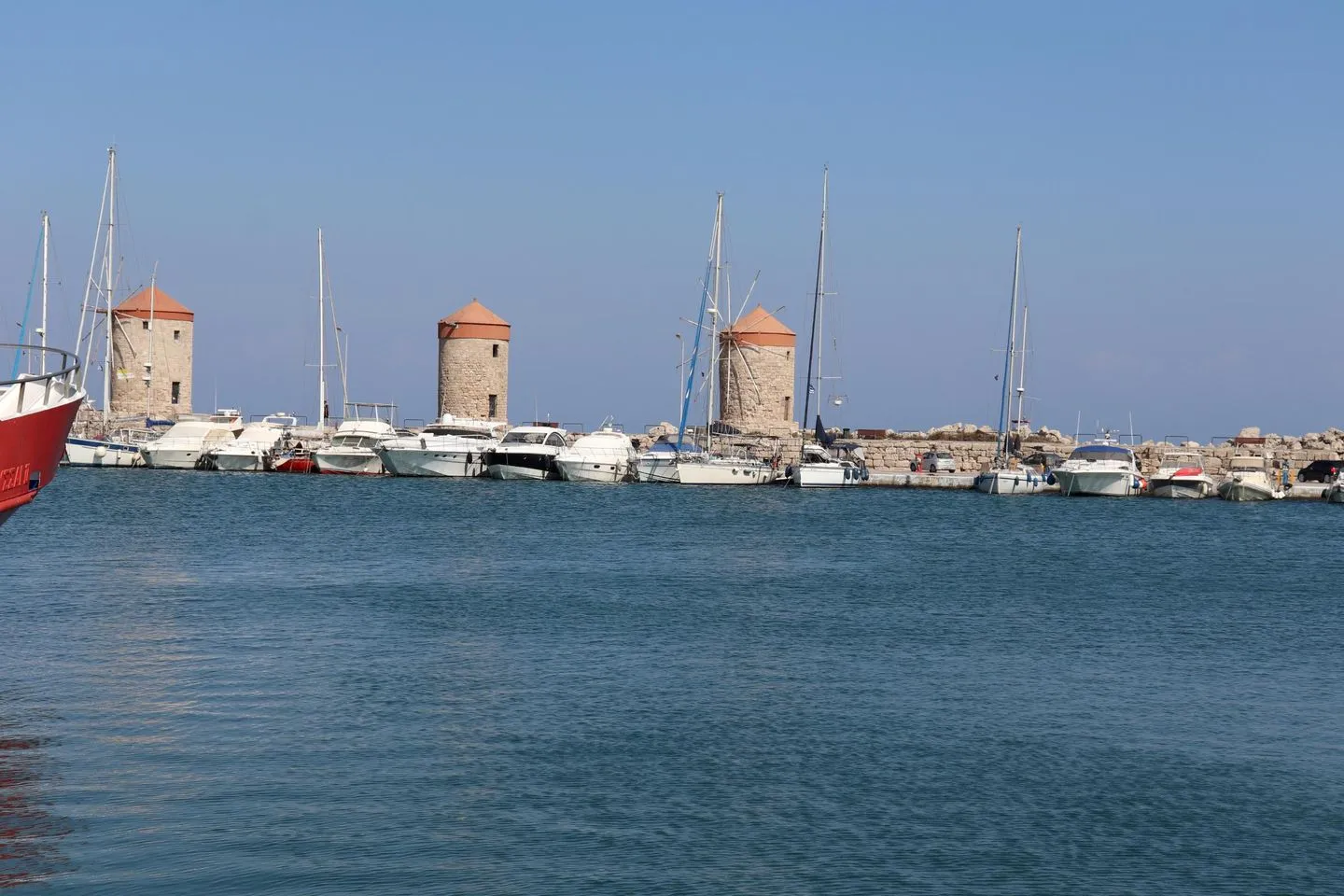
Swimming and Beaches in Rhodes
The water temperature starts at around 18°C in April, reaches 24°C in June, peaks at up to 28°C in July and August, remains pleasantly warm at 24°C until October and drops back to 20°C in November.
The most beautiful beaches are located on the east and south coasts of the island and are generally well organized with sunbeds, umbrellas and facilities.
Water Sports Activities
Rhodes is an ideal destination for water sports enthusiasts. The Meltemi wind, a northern summer wind, creates flat and calm waters especially along the east coast, offering excellent conditions for various water sports.
Hiking in Rhodes
Anyone visiting the island of the sun god should not miss exploring the picturesque hinterland with its idyllic villages and untouched nature. Rhodes is best discovered on foot and its numerous hiking trails make it perfect for this.
Particularly rewarding are hikes combined with sightseeing. One attractive trail leads to the Tsambika Monastery, perched 220 meters above sea level on the east coast. Another highlight is climbing Mount Attavyros, the highest peak on Rhodes at 1,215 meters. Two hiking routes lead to the summit from Agios Isidoros and Embona.
The 14 km ridge trail from Agia Fotini to Archangelos and the spectacular Skoutouljaris Gorge hike are also highly recommended. The best hiking seasons are May–June and September–October when temperatures are more pleasant.
The City of Rhodes
Ancient City
East of the modern city lies an important part of ancient Rhodes. The ancient harbor, today’s Mandraki, was where the Colossus of Rhodes once stood according to mythology. The ancient city of Rhodes was founded in the 5th century BC through the union of Lindos, Ialysos and Kamiros.
On Monte Smith Hill stood the upper Acropolis of ancient Rhodes. Today visitors can see the ancient stadium, theater, remains of the Acropolis and the Temple of Apollo Pythios. The site offers magnificent views over the island, the sea and the nearby Turkish coast.
Medieval Old Town
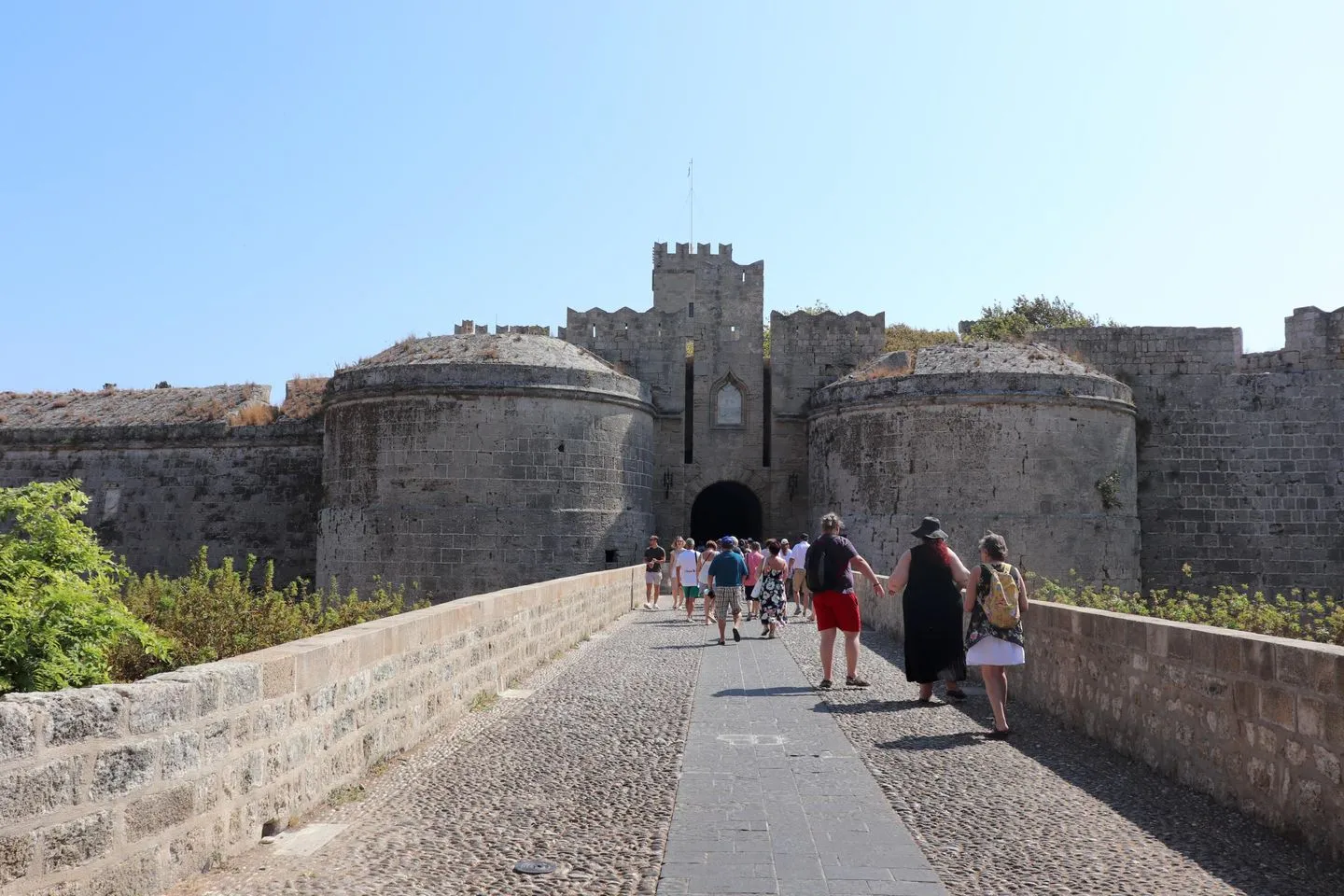
The Old Town of Rhodes is still inhabited today and surrounded by four kilometers of medieval walls. The Palace of the Grand Master dominates the northern section. Along the Street of the Knights stand the famous Inns of the Tongues, representing the different national groups of the Knights of St. John.
The Archaeological Museum is housed in the former Knights’ Hospital. Ottoman-era buildings and the Kahal Shalom Synagogue from 1577 are also among the highlights of the Old Town.
Modern Rhodes Town
Rhodes Town lies at the northern tip of the island and has around 50,000 inhabitants. It combines a modern new town with the medieval old town. The city features two harbors, modern hotels, restaurants, taverns, cafés, clubs and a casino.
Ancient Sites of Rhodes
Acropolis of Lindos
The Acropolis of Lindos rises majestically on a 100-meter-high rock. It was one of the island’s most important ancient sanctuaries and remains one of the most impressive archaeological sites in Greece.
Ancient Kamiros
Kamiros, located on the northwest coast, is one of the three ancient cities of Rhodes. The ruins are often called the “Pompeii of Greece.”
Ialysos
South of Rhodes Town lies Ialysos, where archaeologists discovered one of the richest Mycenaean necropolises in the Aegean world.
Enchanting Villages
Monolithos
Monolithos is a small idyllic village on the southwest coast, famous for its castle perched on a giant rock overlooking the sea.
Gennadi
The traditional farming village of Gennadi is an ideal base for discovering the quieter southern part of Rhodes.
Lachania
Lachania is perhaps the most beautiful village on Rhodes, offering postcard-perfect scenery and complete tranquility.
Rodini Park
Rodini Park near Rhodes Town is a green oasis with pine trees, streams, waterfalls, lakes and small animal enclosures.
The Thermal Baths of Kallithea
Kallithea is famous for its thermal baths, known since antiquity. The beautifully restored spa complex features arches, mosaics and palm-lined atriums.
Wine Culture in Rhodes
Rhodes was one of the first Aegean islands to cultivate wine. The regions of Kamiros and Attavyros produce renowned wines such as Athiri, Mantilaria and Muscat varieties.
Getting There
By plane:
Rhodes Airport, transfer to the holiday homes approximately 1.5 hours.
By ferry: Ferry connection from Piraeus to Rhodes. Transfer to the holiday homes approximately 1.5 hours.
Currently, we do not offer holiday homes on Rhodes.