The map cannot be displayed because you have not yet agreed to the use of GoogleMaps.
You can find the GoogleMaps privacy policy at https://policies.google.com/privacy?hl=en-US
The Lassithi region is the easternmost and least densely populated regional unit of Crete. It is surrounded by the sea on three sides: the Sea of Crete to the north, the Karpathian Sea to the east, and the Libyan Sea to the south. To the west, Lassithi borders the Heraklion region, with the Dikti Mountains forming the natural boundary.
Lassithi stretches along the north-eastern coast of Crete, east of Malia via Elounda, Agios Nikolaos and Istron to Sitia and the famous palm beach of Vai. Inland, the Lassithi Plateau and the surrounding Dikti and Sitia mountains dominate the landscape. On the south coast lies Ierapetra, the only town on Crete’s southern coast. The capital of the region is Agios Nikolaos.
The coastline of Lassithi is remarkably diverse: deeply indented bays such as Mirabello Bay, the Voulismeni lagoon in Agios Nikolaos, long beaches, as well as large and small harbours such as Elounda, Sitia, Poros and Faneromeni in the north. The islands belonging to the region are numerous, each with its own distinctive character.
North of Sitia lie the uninhabited islands of Paximada, Dragonada and Dionysada, while south of Vai Palm Beach are the Grantes islands. South of Ierapetra, the islands of Koufonissi Lassithiou and Chrissi lie in the Libyan Sea.
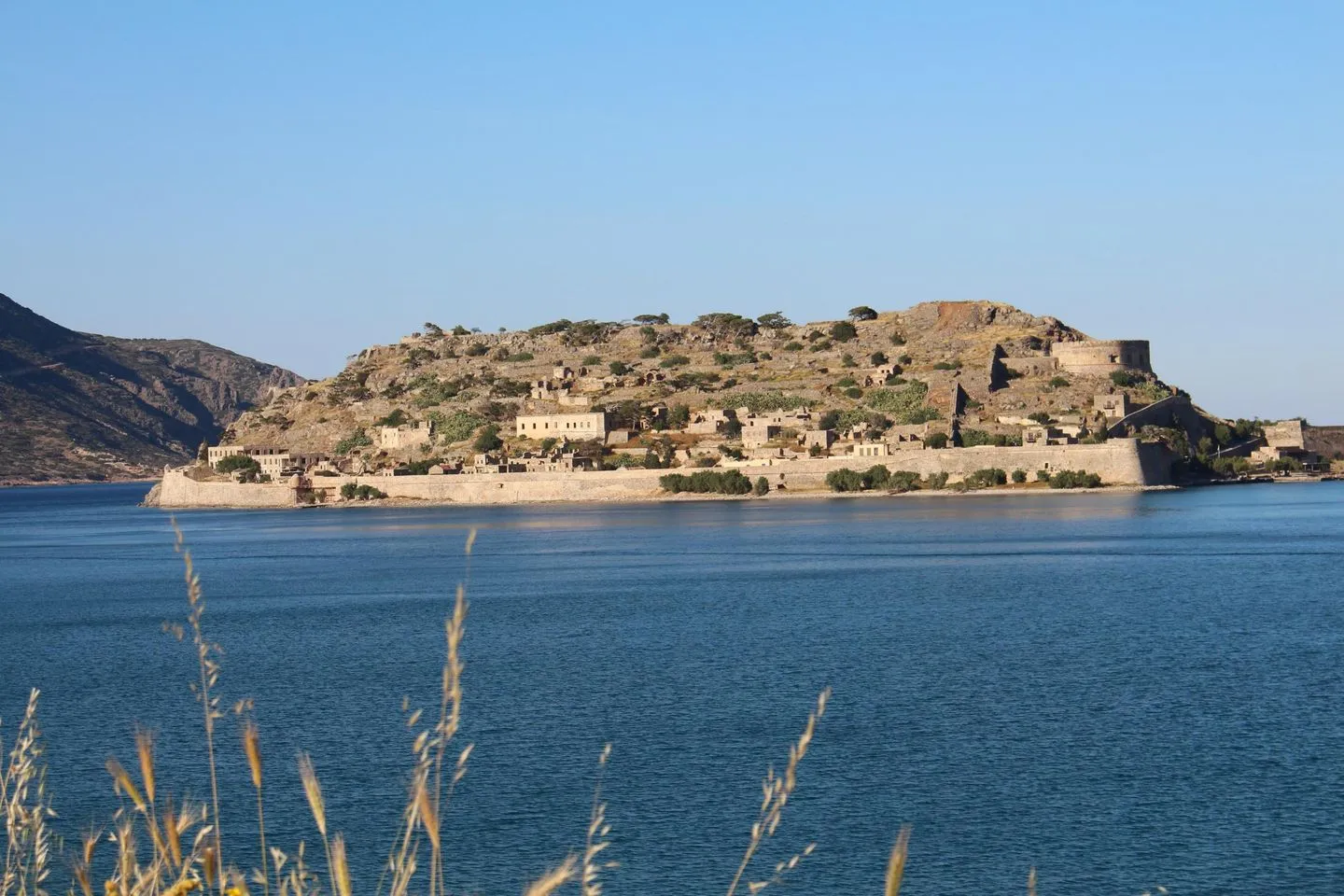
The island of Spinalonga near Agios Nikolaos and Elounda, with its Venetian fortress, served for many years as a place of exile for people suffering from Hansen’s disease and is now a popular excursion destination. The island of Agii Pantes is a refuge for the Cretan wild goats (Kri-Kri). The island of Psira and the Dionysades are uninhabited and home to ancient remains. Chrissi, with its endemic cedar trees and beautiful beaches, is an exotic destination in the Libyan Sea.
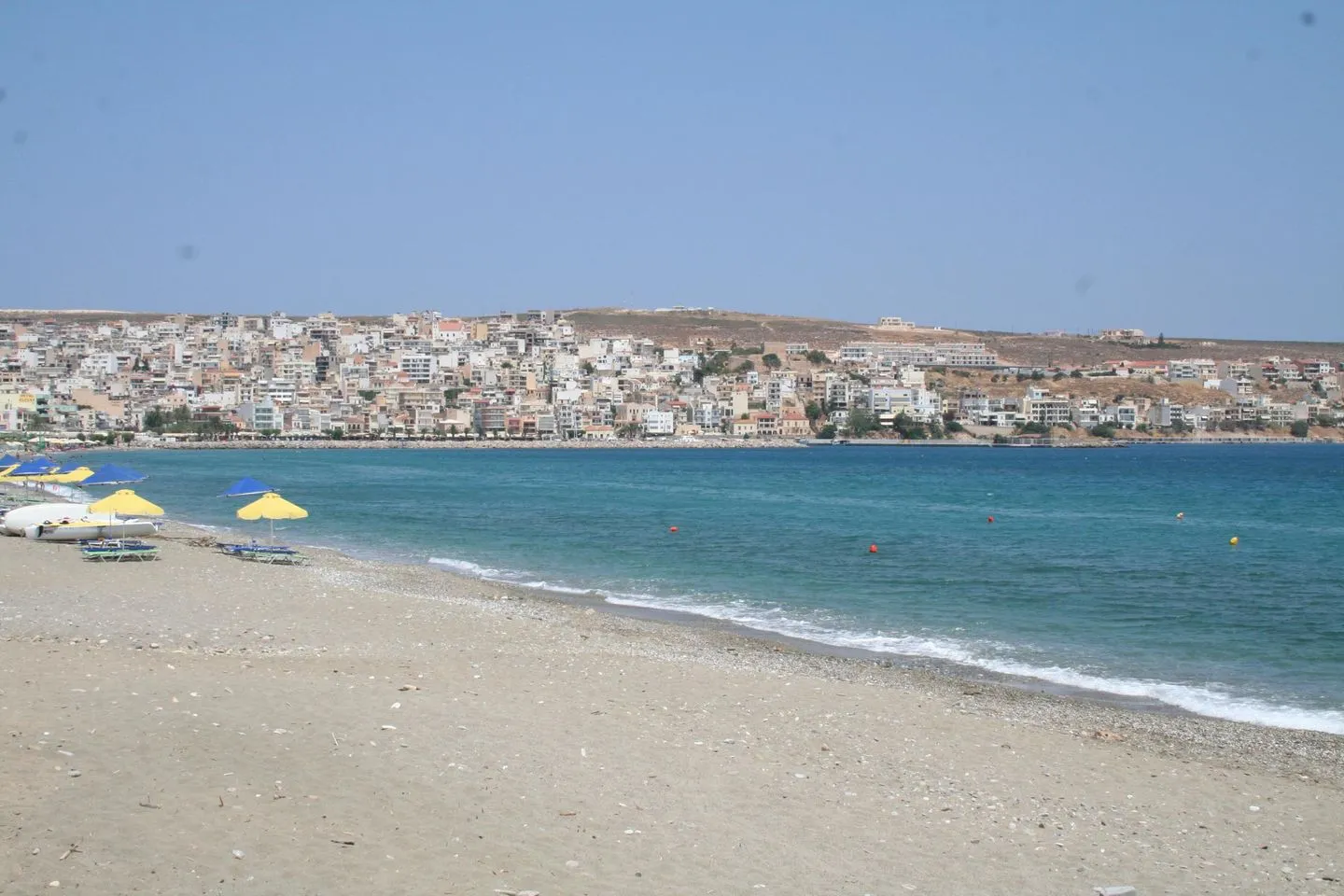
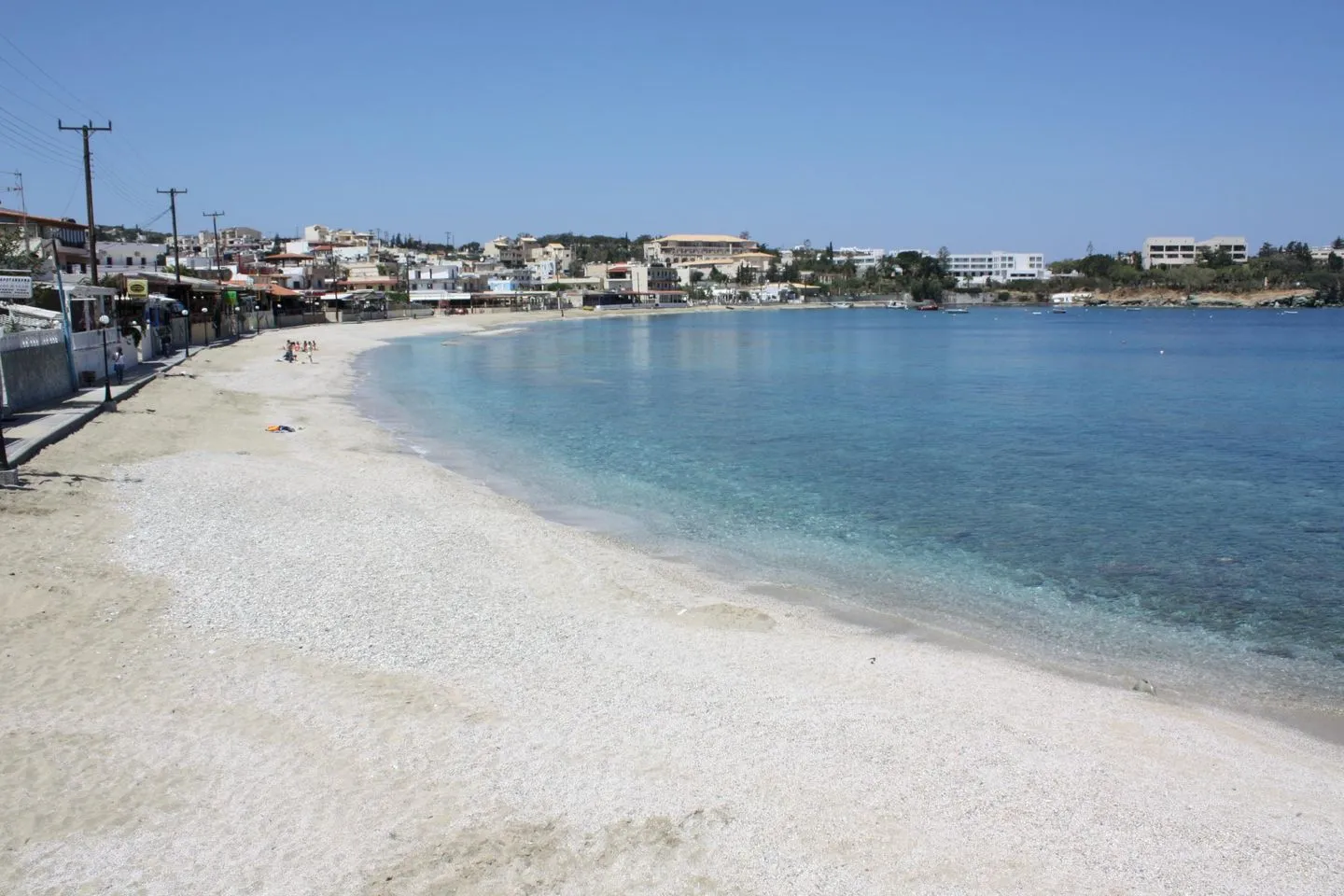
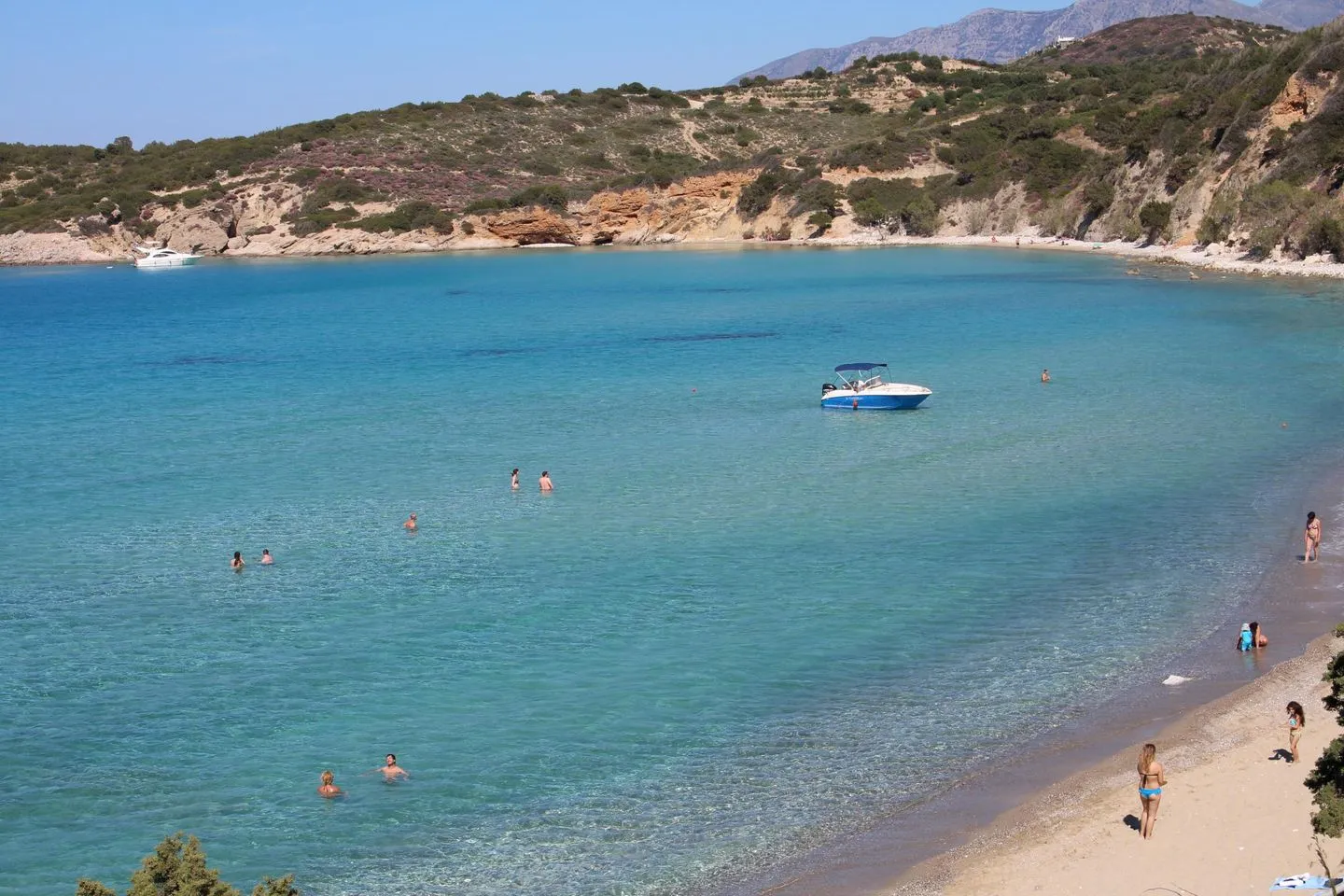
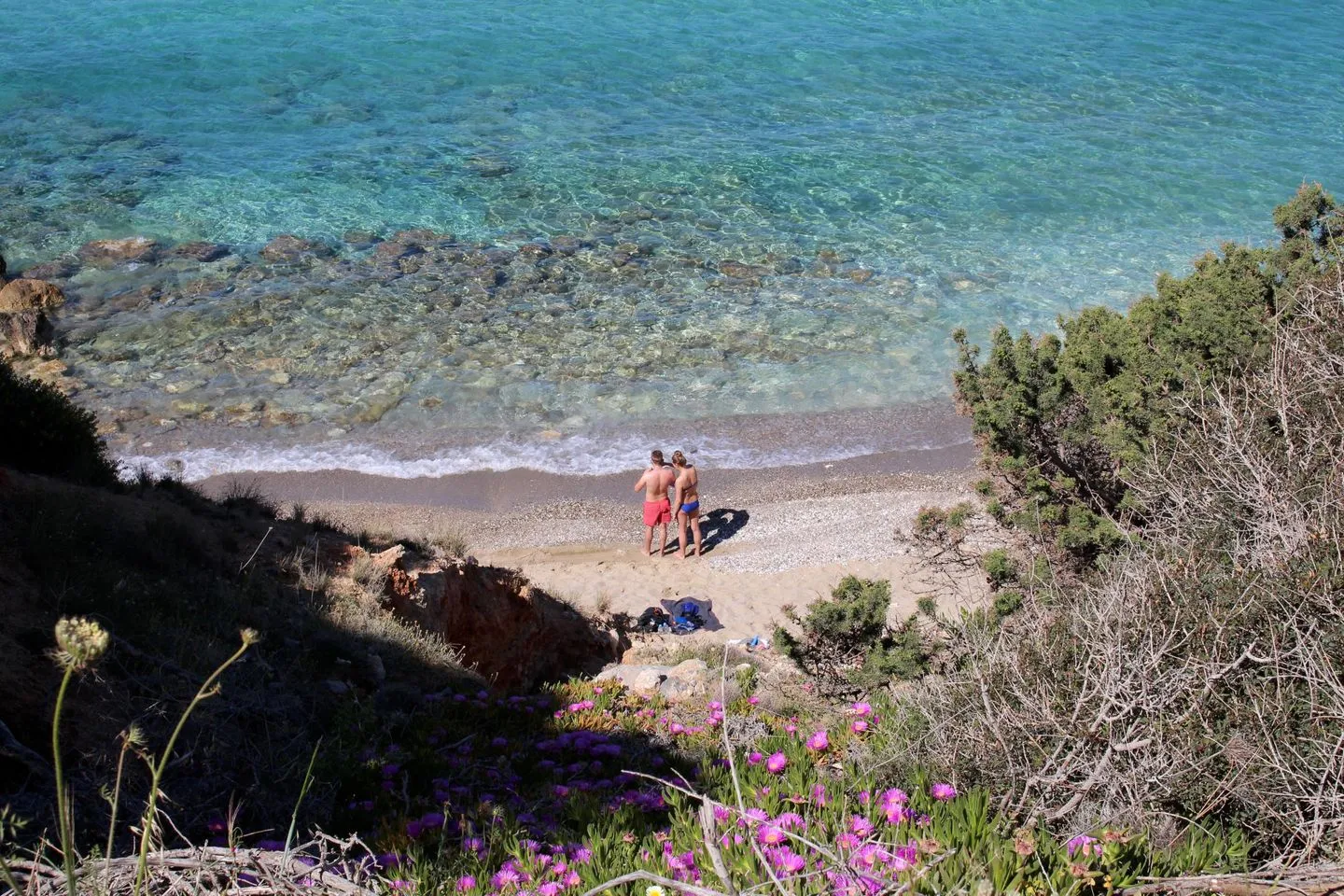
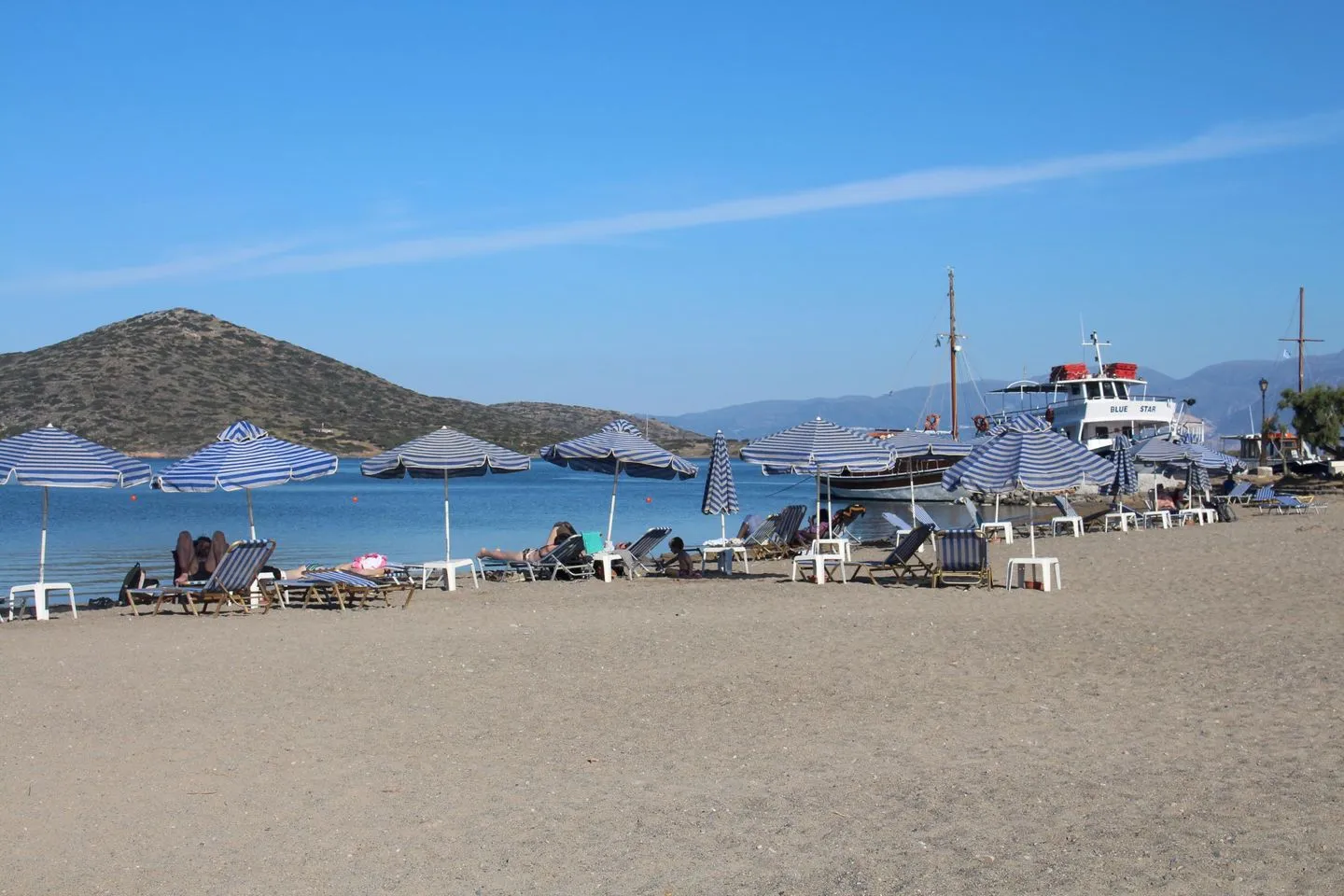
The north-eastern coast of Crete stretches from Elounda and Agios Nikolaos via Sitia to the palm beach of Vai. In addition to the famous palm beach, there are countless wonderful beaches along the Lassithi coast and around the charming little islands of the region. Most are located in the north, while the beaches on the south coast are more untouched and secluded.
On the north coast, about 10 km south of Agios Nikolaos, in the heart of the deep Mirabello Bay, lie three of the most beautiful beaches in Lassithi around the village of Istron:
Vai Palm Beach, accessible via the village of Palaiokastro, is considered one of Crete’s dream beaches. The approximately 400 m long white sandy beach is surrounded by one of the largest palm forests in Europe – around 5,000 palm trees across roughly 20 hectares.
The forest is considered endemic and has been documented since ancient times. Vai lies 25 km from Sitia and 7 km from Paleokastro. Today, the beach is a protected nature reserve and home to rare plant and animal species.
Itanos Beach lies around 100 km east of Agios Nikolaos, 25 km east of Sitia and just 8 km north of Vai. It consists of three small, picturesque beaches and is named after the ancient city of Itanos.
On the south coast, around 20 km east of Ierapetra, lies Makrigialos (“Long Beach”), a popular organised beach with crystal-clear water and a wide range of water sports.
Ha Gorge (Thripti) lies around 25 km south of Agios Nikolaos and 5 km from Pachia Ammos. It is one of the wildest gorges in Crete, around 2 km long and narrowing to just a few metres in places.
Small waterfalls, pools and rare plant species shape the landscape. The gorge is only accessible to experienced visitors with the appropriate equipment.
Havgas Gorge lies on the Lassithi Plateau, near Kalamafka, 12 km north of Ierapetra. It is around 4 km long, easy to walk and leads through impressive rock formations and maple forests to Lake Neraidokolympos.
Dikti Cave is one of the most important caves in Greece and lies near Psichro at an altitude of 1,025 m. According to mythology, Zeus was born here.
Archaeological finds prove that the cave has been in use since the Neolithic period. It is famous for the impressive stalactite known as the “Mantle of Zeus”.
The Lassithi Plateau, around 50 km west of Agios Nikolaos, lies at an altitude of 820 m and covers approximately 25 km². The famous windmills once shaped local agriculture.
The surrounding area offers historical sites, traditional villages such as Tzermiado and Agios Georgios, as well as a variety of hiking and cycling routes.
Around 30 km north of Ierapetra lies Selakano Forest, one of Crete’s most biodiverse ecosystems, dominated by a rare species of pine.
The area is protected under Natura 2000 and is a centre of Cretan beekeeping. The European long-distance hiking trail E4 runs through the forest.
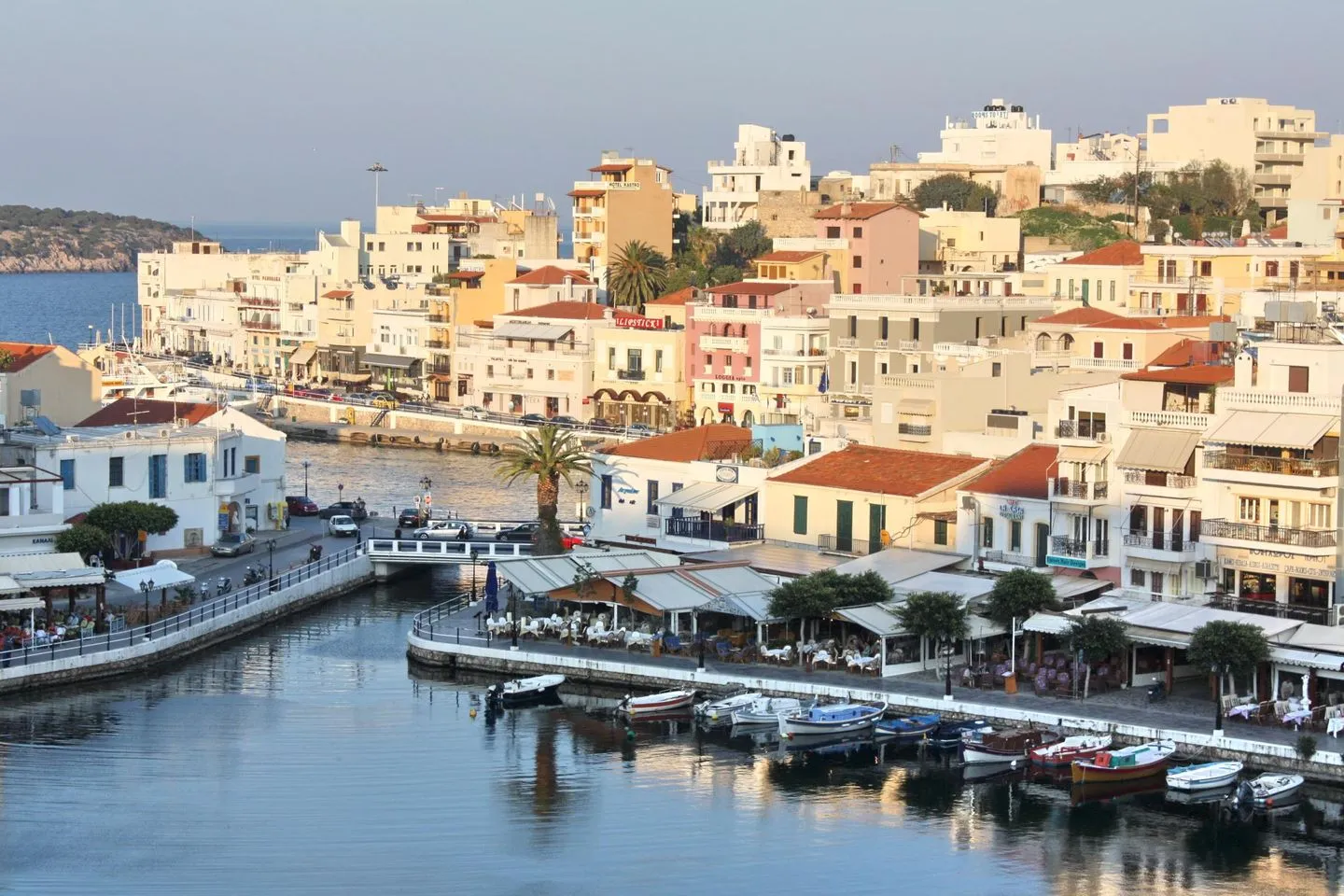
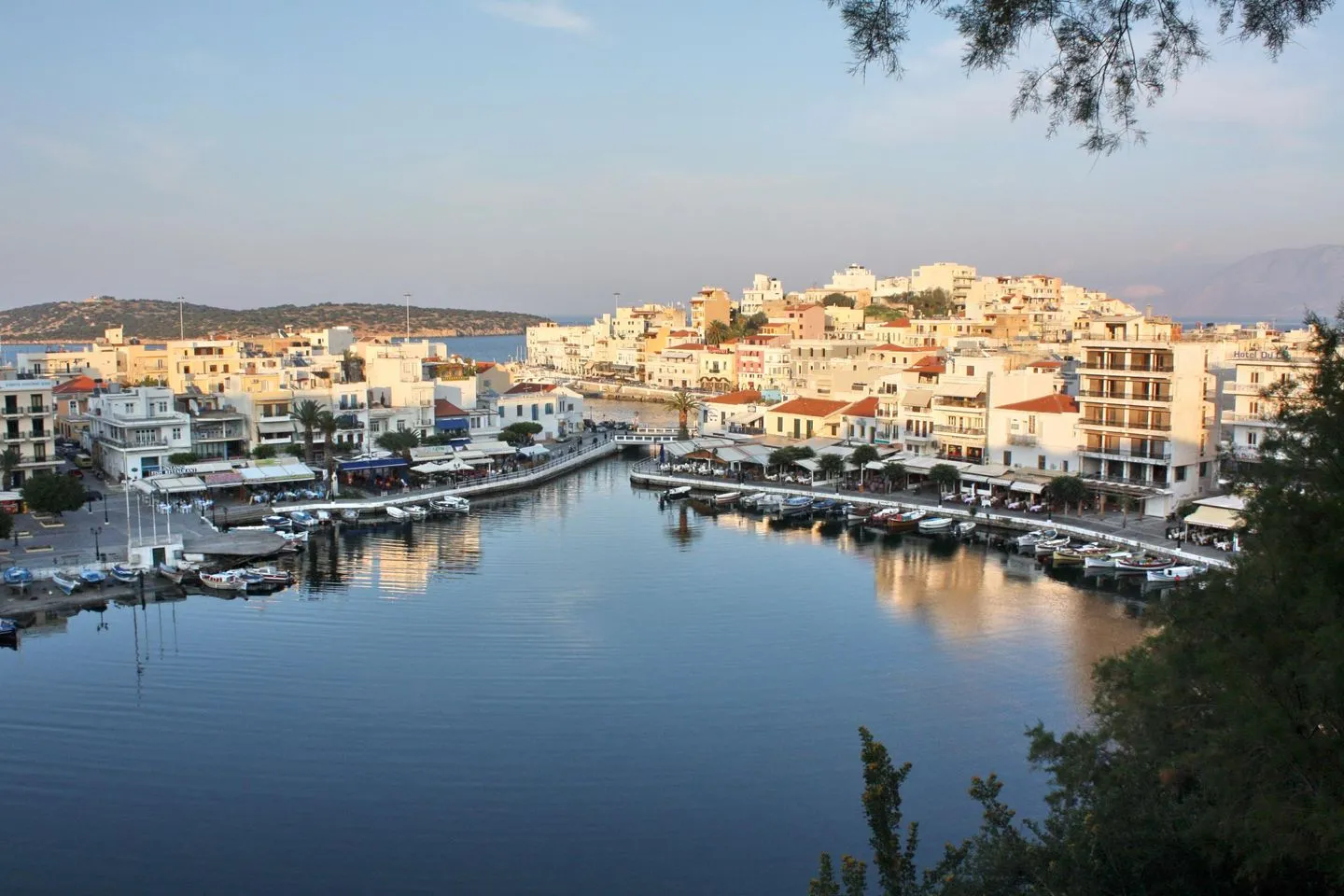
Agios Nikolaos is a charming small town in Mirabello Bay, known for its inland lake Voulismeni, surrounded by steep red cliffs.
The town offers museums, Byzantine churches, a picturesque harbour, cafés, tavernas and fine sandy beaches.
Located between Elounda and Mirabello Bay, Spinalonga was first fortified in ancient times and later shaped by Venetian and Ottoman influences.
In the 20th century, the island served as a leper colony. Today it is uninhabited and an impressive excursion destination. Boat trips depart from Elounda, Plaka and Agios Nikolaos.
Kritsa is considered one of the most beautiful villages in Crete and became known through several film productions.
The nearby Church of Panagia, with its 15th-century frescoes, is one of the island’s most beautiful sacred buildings.
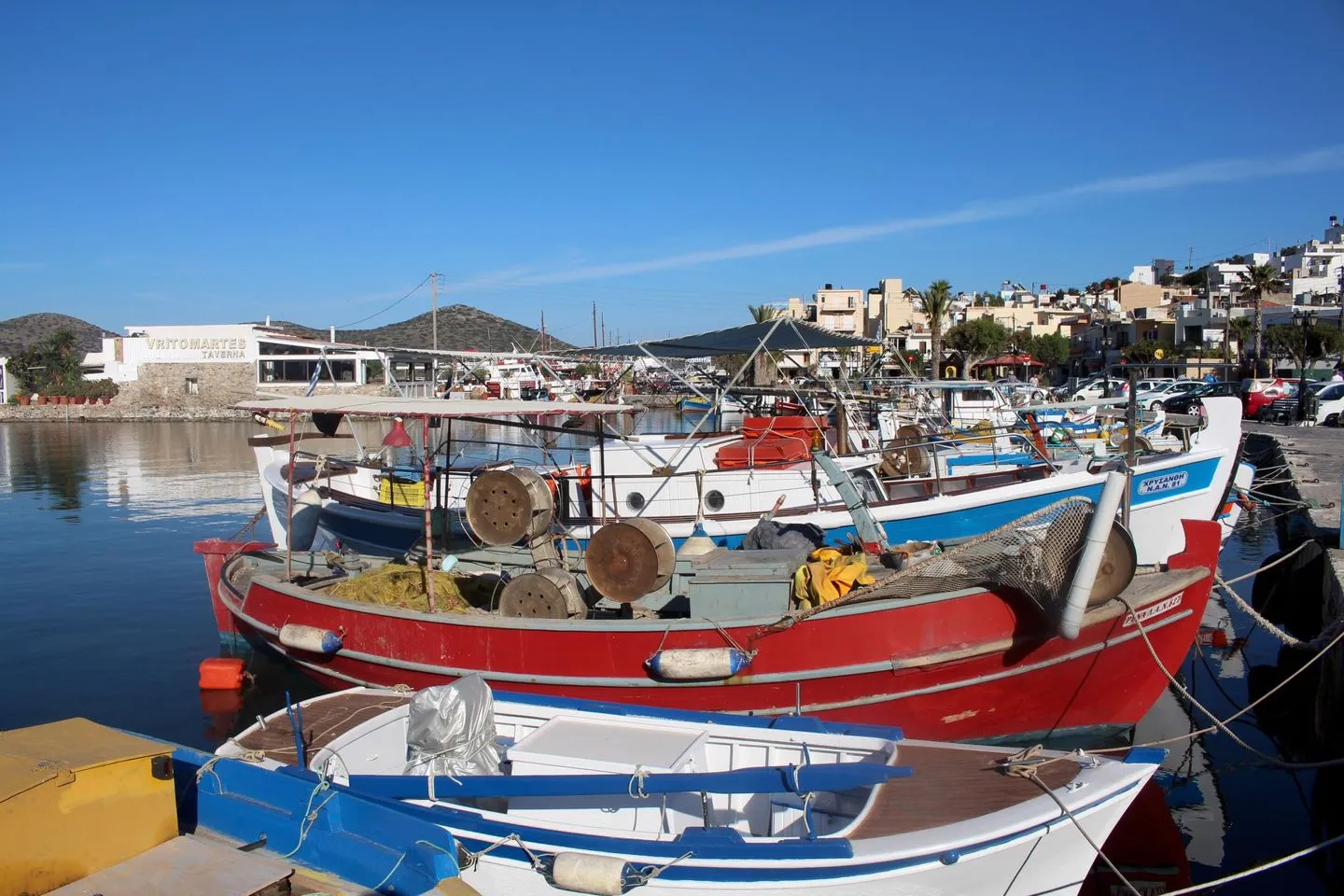
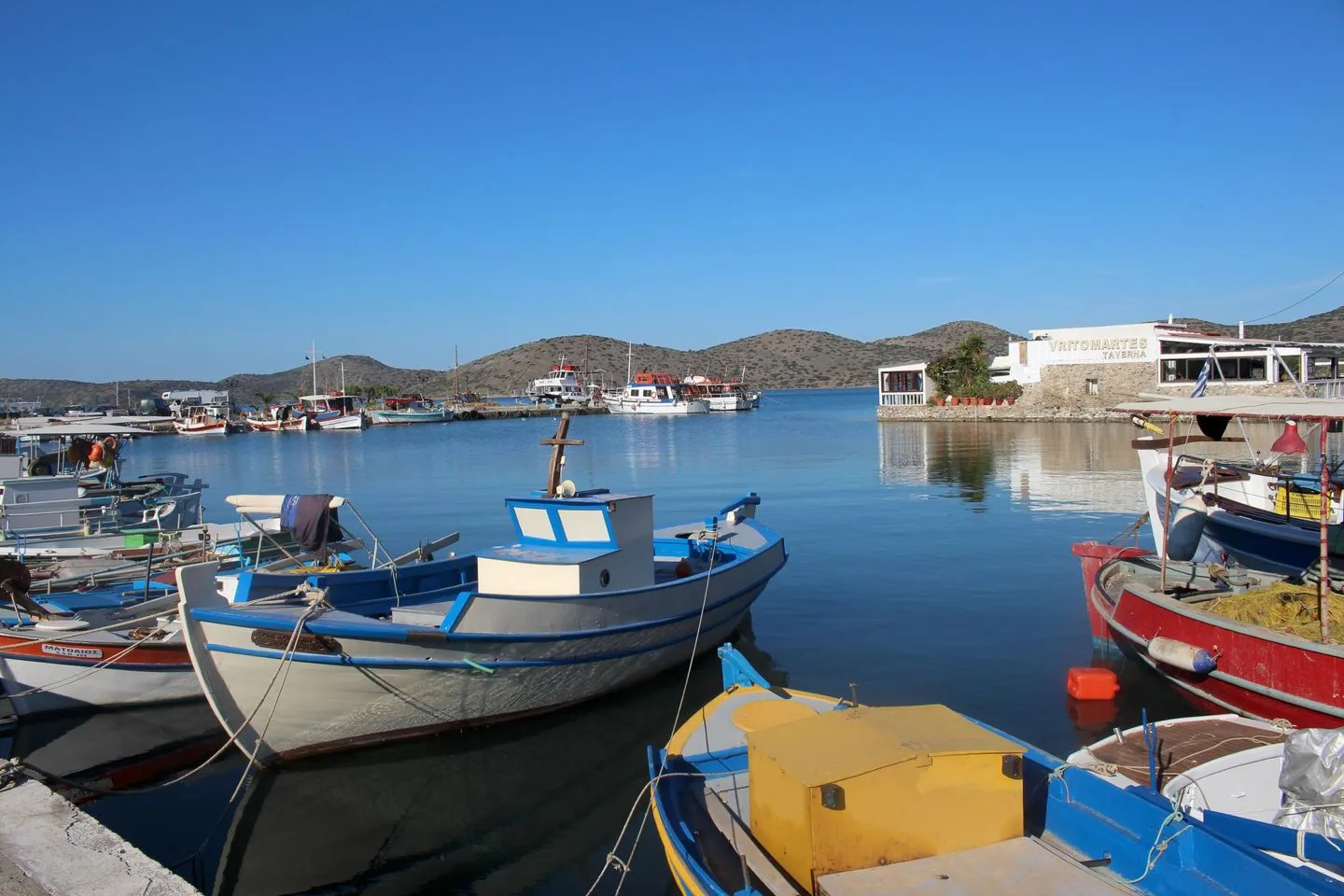
Elounda is a small town with a charming harbour, known for its hotels and beautiful beaches. This is where the Minoan town of Olous once stood, with some of its remains still visible beneath the water.
We currently do not offer accommodation in Elounda – we recommend our Kounenos holiday homes near Istron instead.
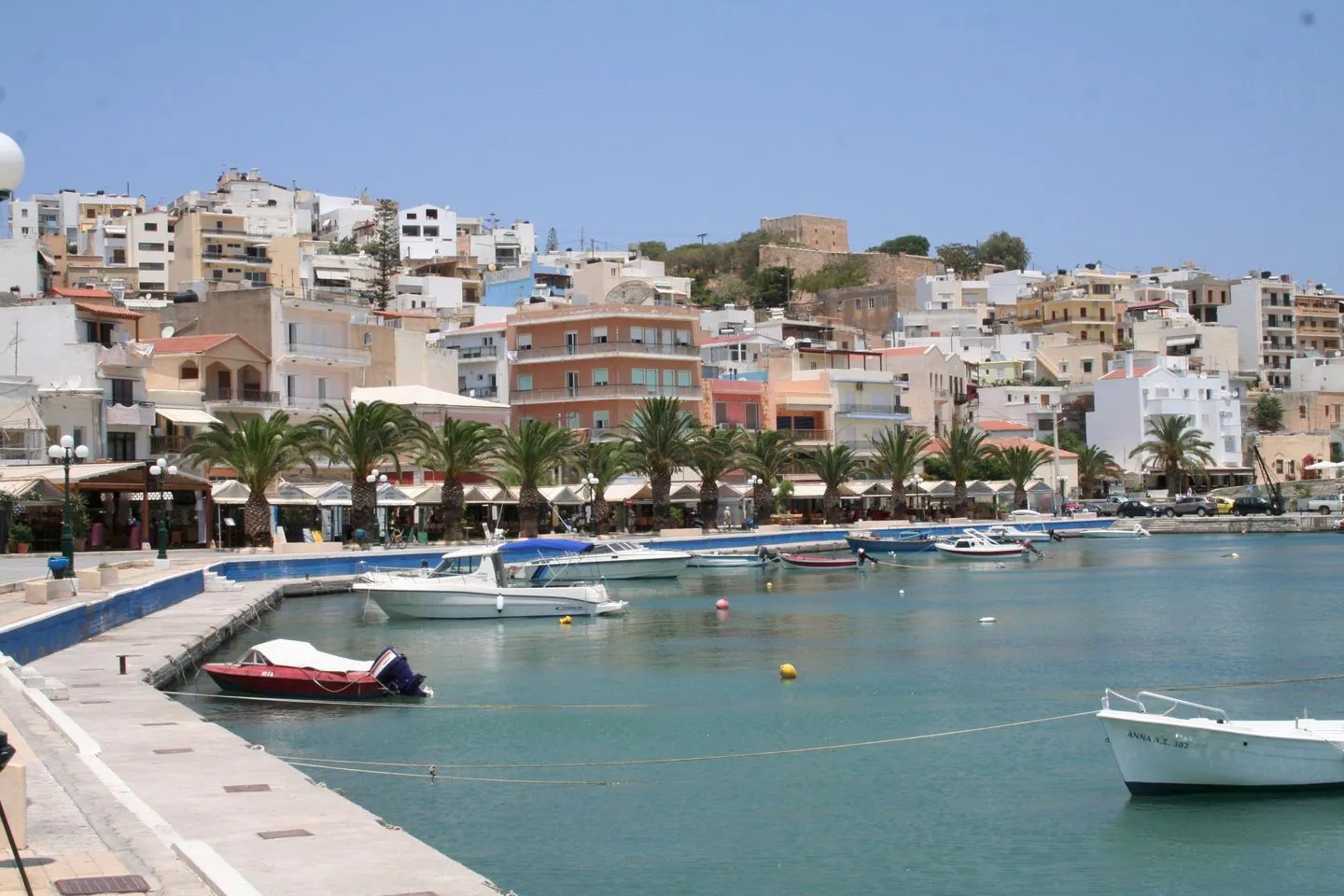
Sitia is a peaceful small town at the eastern end of the north coast. A Venetian fortress, narrow alleys and a well-kept harbour promenade shape the townscape.
The Kazarma fortress dominates the town and gives it its historic character.
Episkopi is a small village with a bishop’s church and the Venetian Kasarma castle, located on the pass between the north coast and Ierapetra.
From here, visitors can enjoy wonderful views over the surrounding landscape.
Ierapetra is the fourth-largest town in Crete, the only town on the south coast, and at the same time the southernmost town in Europe.
Its defining features include the Kales fortress, the fishing harbour, Ottoman-influenced alleys and a special Mediterranean charm. Today, the fortress is used for cultural events.
The uninhabited island of Chrissi lies 8 nautical miles off Ierapetra. It is famous for its pink-hued beaches, juniper forest, Roman graves and a 13th-century church.
The island is part of the Natura 2000 programme and is one of Crete’s most extraordinary natural destinations.
Toplou Monastery is one of the most important monasteries in Crete and lies around 10 km from Palekastro. It was founded in the 14th century and, with its high walls, resembles a fortress.
The complex impresses with Renaissance elements, important icons and frescoes. Today, the monastery is also known for its wine, raki and olive oil.
Lato is one of the most impressive Doric archaeological sites in Crete and lies near Kritsa. From here, there are wonderful views over Mirabello Bay.
The ancient city of Itanos is now partly submerged, but its remains are still visible. It was once an important Phoenician trading centre.
The Minoan Palace of Zakros lies in a remote part of eastern Crete and is the fourth-largest palace on the island. It is located directly at the exit of the famous “Gorge of the Dead”.
Gournia is a small Minoan town with houses and narrow lanes and is particularly interesting because there was no large palace here. This gives visitors a rare insight into everyday life in Minoan times.
On the north coast south-east of Agios Nikolaos – between rugged coastlines, olive groves and gently rolling hills – you will find many beautiful beaches along Mirabello Bay.
Above Voulisma Bay, in an elevated position with breathtaking views over Mirabello Bay and the Aegean Sea, lies the well-maintained Kounenos holiday complex with a shared pool.