The map cannot be displayed because you have not yet agreed to the use of GoogleMaps.
You can find the GoogleMaps privacy policy at https://policies.google.com/privacy?hl=en-US
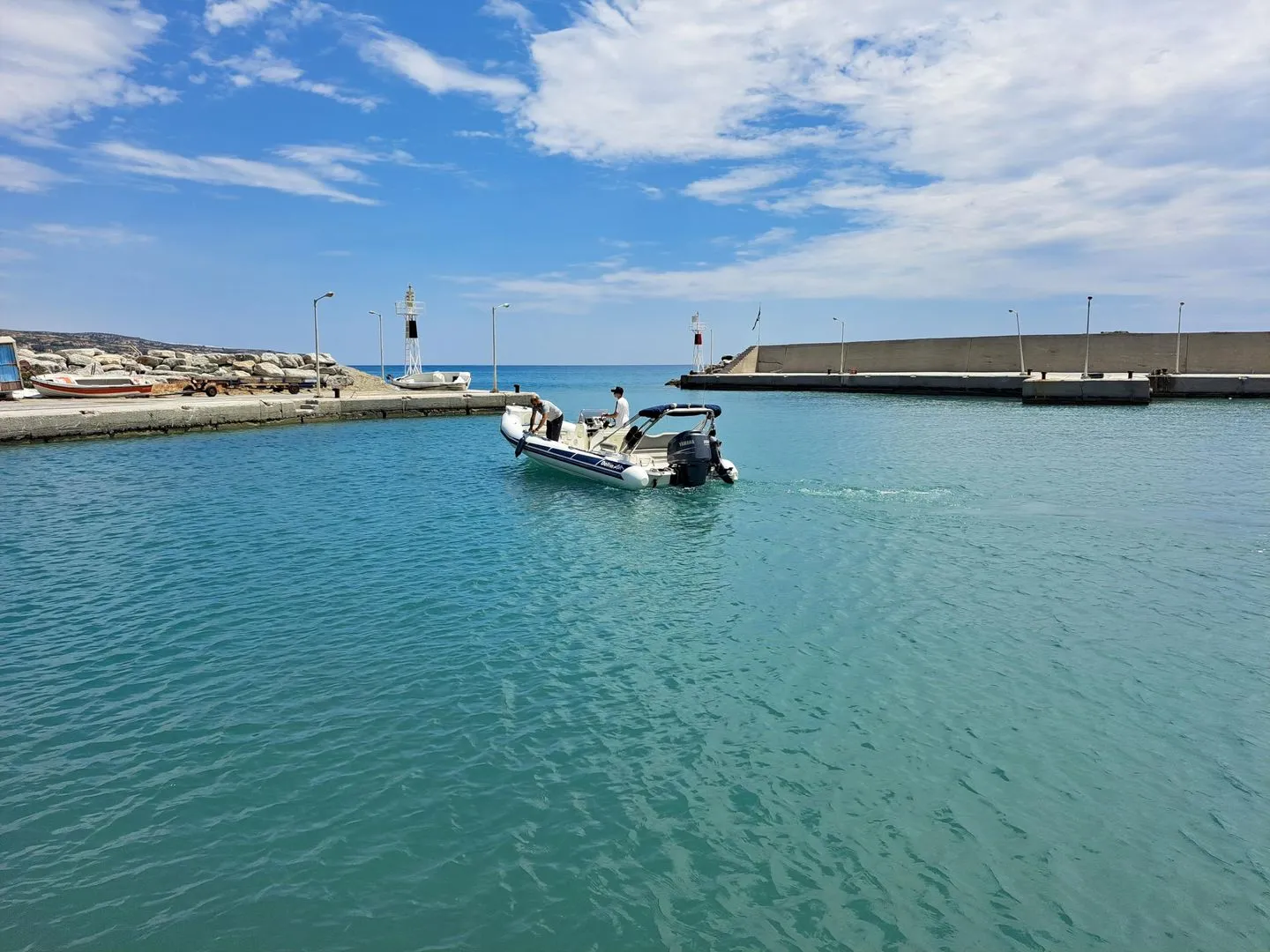
Minoan heritage, Venetian landmarks and authentic Cretan tradition.
This region lies between Rethymno to the west and Lassithi to the east. It is bordered by the Cretan Sea to the north and the Libyan Sea to the south. The administrative center of the region and the capital of the island is the city of Heraklion, with a total population of around 300,000.
The northern coastal stretch of Crete, from Aghia Pelaghia west of the city of Heraklion and eastwards as far as Malia, is characterized by varied, gentle, green landscapes with extensive sandy beaches around Heraklion, as well as broad, fertile plains in the north and south, framed by imposing mountains to the west and east.
The southern coast, from Aghia Galini and Matala eastwards to Myrtos near Ierapetra, is marked by dramatic, rugged mountain scenery with rocky outcrops and sheltered bays along the Libyan Sea.
Travelling south from Heraklion on the north coast, you will find an old and extensive wine-growing region in the Kastelli plain. The fertile valleys of the Messara plain not only supply the island with their produce, but also represent an important export sector.
High snow-capped peaks of the Ida and Dikti mountains, the fertile plains of Kastelli in the north and Messara in the south, rivers, streams and a blue coastline shape the landscape of this region. In the north lie the capital Heraklion with its beautiful Venetian-era buildings, the Minoan palace of Knossos, and the ancient sites of Mallia and Phaistos.
In the south stretches a sparsely populated landscape with villages and regions full of authenticity, set before beautiful, secluded bays and fine sandy beaches. They still offer visitors pure idyll – far away and untouched by mass tourism.
On this enchanting southern coast of Crete, our carefully selected accommodations near Keratokampos offer a relaxed and peaceful holiday with family, friends or as a couple. On the northern coastline east of the capital Heraklion, the location of our holiday homes near Analipsi allows for a vacation right by the fine sandy beach.
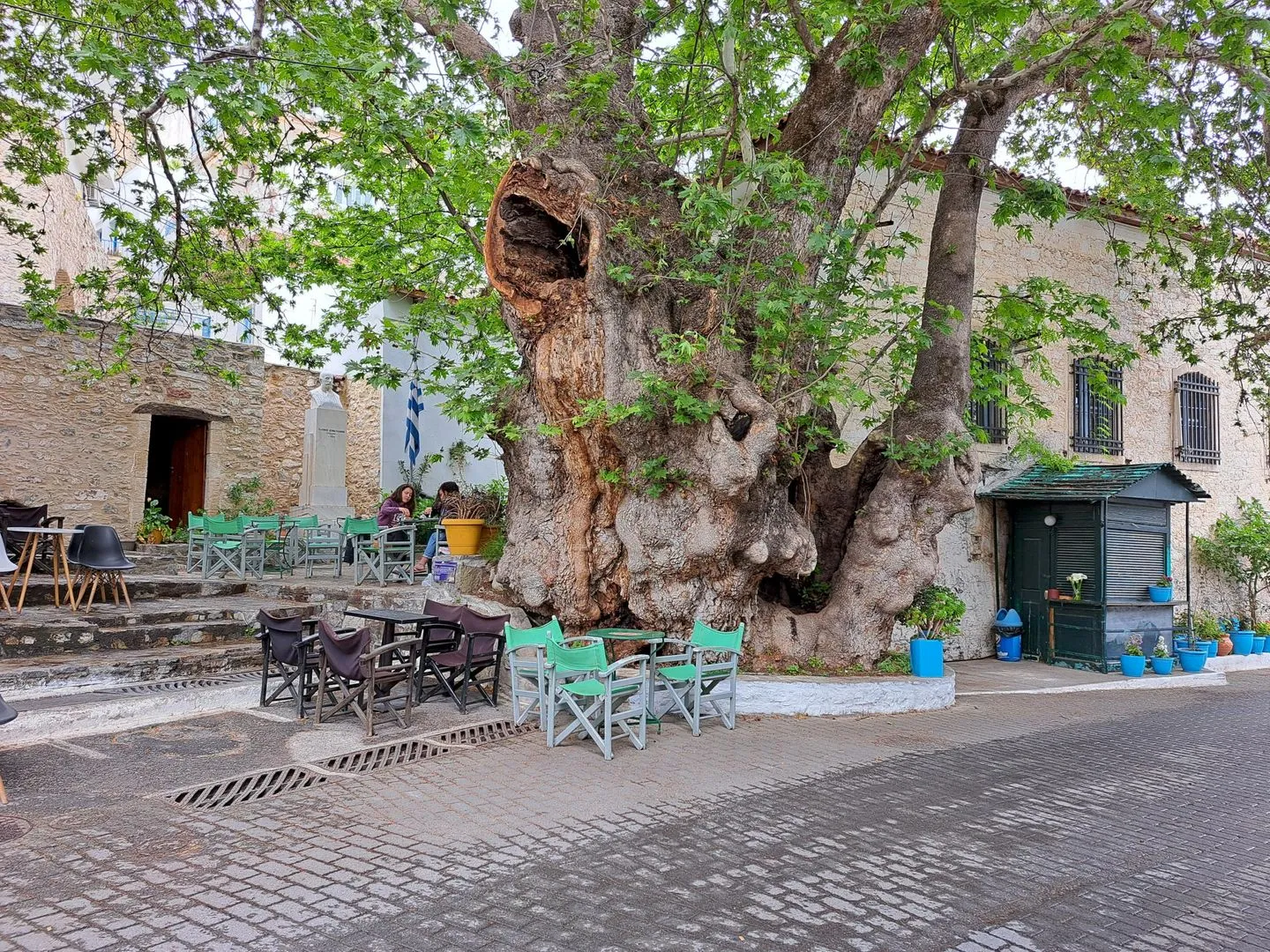
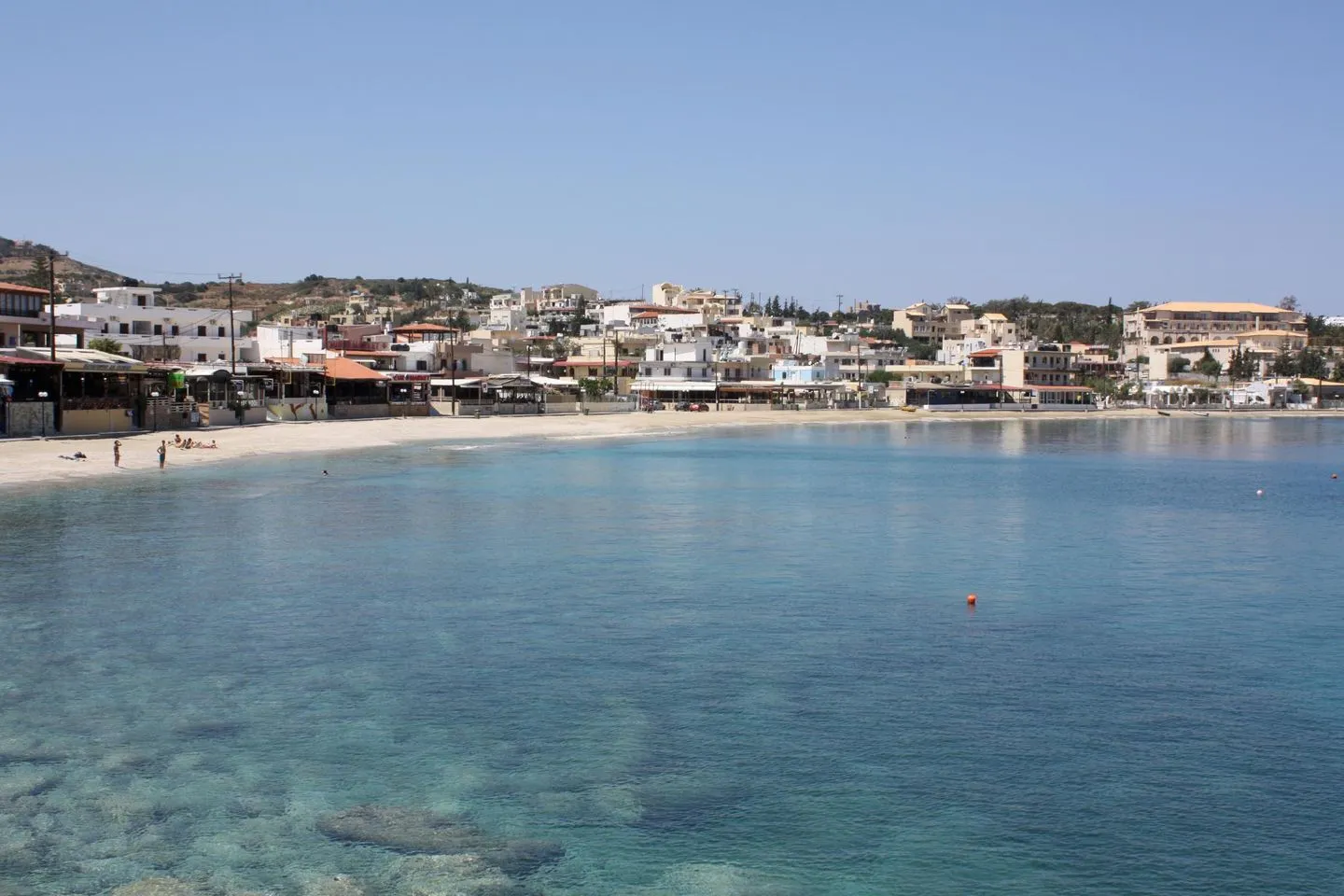
The northern coastal stretch of Crete, east and west of Heraklion, is characterized by a varied, green landscape with wide sandy beaches at Aghia Pelaghia, Gouves, Analipsi and Mallia. The kilometers of shallow sandy beaches along this section of the northeastern coast mostly offer well-developed infrastructure and many water sports opportunities.
The southern coast of the region along the Libyan Sea lies between steep mountain slopes, rugged bays and rocky headlands. It is home to many peaceful, unique sandy beaches with azure-blue water: Matala, Lentas, Tsoutsouro, Kastri, Keratokampos and Myrtos.
Knossos is one of the most fascinating sights and the most impressive Minoan excavation site you can visit during a holiday in Crete. Archaeologists have debated the reconstruction of the site for decades. For visitors, however, it creates a vivid impression that helps bring the Minoan era and its way of life to life. The destruction of the palace remains a mystery to this day.
The vast palace complex of Knossos lies just a few kilometers south of Heraklion. It was an important economic and cultural center of the Minoan era, where Europe’s earliest advanced civilization flourished more than 4,000 years ago. Built over an area of 20,000 square meters, the complex once consisted of up to 1,400 rooms in buildings of two to four stories.
The original delicate frescoes and other finds from the palace can be admired in the Archaeological Museum of Heraklion. The best time to visit is in the afternoon, when most tour groups have already left.
Phaistos, Crete’s second-largest Minoan palace, is said to have been founded by King Minos. The first structure was built around 2000 BC and was destroyed and rebuilt several times due to earthquakes and fire.
The reconstruction by Italian archaeologists around 1900 is more restrained than at Knossos, which gives the site a more authentic atmosphere. The famous Phaistos Disc – a clay disc with a mysterious inscription that remains undeciphered to this day – was discovered here. It is on display in the Archaeological Museum of Heraklion.
Gortyn lies around 50 km southwest of Heraklion between the villages of Aghioi Deka and Mitropolis. Worth seeing are the remains of the ancient Roman settlement: the baths, the Temple of Isis, Serapis and Apollo, the theater, and the ruins of the Church of Titus, an early Christian basilica.
Mallia preserves evidence of the residential, commercial and industrial life of a 3,500-year-old city. The third-largest Minoan palace is attributed to the mythical King Sarpedon. The complex includes grain silos and storage buildings with sophisticated drainage systems.
Archanes is well worth a visit because of its significance in Crete’s ancient past. Northwest of the village lies the largest Minoan necropolis in the Aegean region.
The city of Heraklion – called Iraklio by the Greeks – is the island’s largest city and capital, with around 250,000 inhabitants. With its airport, ferry port and university, it forms the economic center of the island.
Throughout its history, the city has had many names: Herakleion in the Roman period, Rabḍ al-ḫandaq in the Arab period, Chandax in the Byzantine period and Candia in the Venetian era. Arabs, Byzantines, Genoese, Venetians and Ottomans ruled the city over more than ten centuries and all left their mark.
In the city center, the Venetian-era buildings are especially worth seeing: the churches of San Marco, Saint Titus and Saint Minas, the Loggia (now the Town Hall), and the nearby Lion Square with the Morosini Fountain. The Venetian fortifications in the harbor are also impressive.
The Venetian harbor is dominated by the Koules Fortress. Dating from the 15th century, it is the city’s landmark. The tomb of the writer Nikos Kazantzakis is located in the Martinengo Bastion on the city walls.
The museum in the heart of the city invites visitors on a journey through 5,500 years of Minoan history. It is one of the most important museums in Greece. The exhibits range from the 6th millennium BC to the 3rd century AD.
Among the most significant pieces are ceramics, miniature sculptures, metalwork, frescoes and sarcophagi. Particularly famous are the Snake Goddesses, the fresco “La Parisienne,” the “Prince of the Lilies,” the Dolphin Fresco and the Phaistos Disc.
Archanes is worth a visit not only for its ancient significance, but also for its wine production. One of Crete’s most important wine cooperatives is located here.
In Peza, about 18 km southeast of Heraklion, visitors can see old wine-making machinery and purchase local products.
The aquarium is located in Gouves, a few kilometers east of Heraklion. It is the largest aquarium in the Mediterranean region and was founded in 2005 by the Hellenic Centre for Marine Research. More than 2,000 animals from 200 Mediterranean and tropical species live in 61 tanks.
Matala is famous for its rock-cut caves and its beautiful beach. In the 1960s, followers of the hippie movement lived here, including well-known musicians such as Bob Dylan and Cat Stevens. Today, Matala is especially popular for its beach.
Portela Gorge lies around 60 km southeast of Heraklion and is about 5 km long. The stream carries water from the Viannos plateau to the sea. The gorge is considered one of the wildest in Greece and is especially popular with canyoning enthusiasts.
The hike takes about 3 hours. The Richtra waterfall, about 1 km before the gorge reaches the sea, can be reached relatively easily from Keratokampos.
Ano Viannos is a beautiful historic village on the southern slopes of the Dikti Mountains at an altitude of 560 meters. Its amphitheatrical setting offers impressive views. The village has around 1,000 inhabitants, who mainly live from agriculture and livestock farming.
Keratokampos is a charming, modern coastal village in the municipality of Viannos with a beach stretching around 7 km. Together with neighboring Kastri, it forms one settlement about 70 km southeast of Heraklion. Portela Gorge ends here and offers excellent hiking opportunities.
The Monobouka beach at the edge of the village offers fine pebbles and peace far from mass tourism. Taverns serve traditional Cretan cuisine, especially fresh fish. The area has a long history, including the ancient city of Keraia and a Venetian fortress.
Keratokampos is ideal for guests seeking a peaceful escape in nature: beautiful beaches, rural charm, tranquility, sunsets and crystal-clear sea.
Keratokampos
From Heraklion, the road first leads south from the northern coast through green plains and wine-growing areas – passing through Cretan villages such as Archanes, Peza and Arkalochori, and along the slopes of the Dikti and Ida mountains. It then winds through the Asterousia Mountains and reaches the Libyan Sea at Keratokampos.
Here, directly above Monobouka Beach, are our comfortably furnished holiday homes Armenopetra and Vigla, situated on a shared enclosed garden property with wonderful sea views. Only a few steps separate the property from the almost private beach. A few meters higher up is our holiday home Petrino, a stone house with arcaded terraces and sea view.
Analipsi
East of Heraklion, directly on the coast between Gouves and Chersonissos, lies the village of Analipsi. Its fine sandy beach and good connection to Heraklion have made it a popular summer destination. Larger and smaller hotel complexes can be found on both sides, and the range of leisure and water sports activities is extensive.
Our holiday homes Inga and Daven are located a few hundred meters from the beach on a shared property.