The map cannot be displayed because you have not yet agreed to the use of GoogleMaps.
You can find the GoogleMaps privacy policy at https://policies.google.com/privacy?hl=en-US
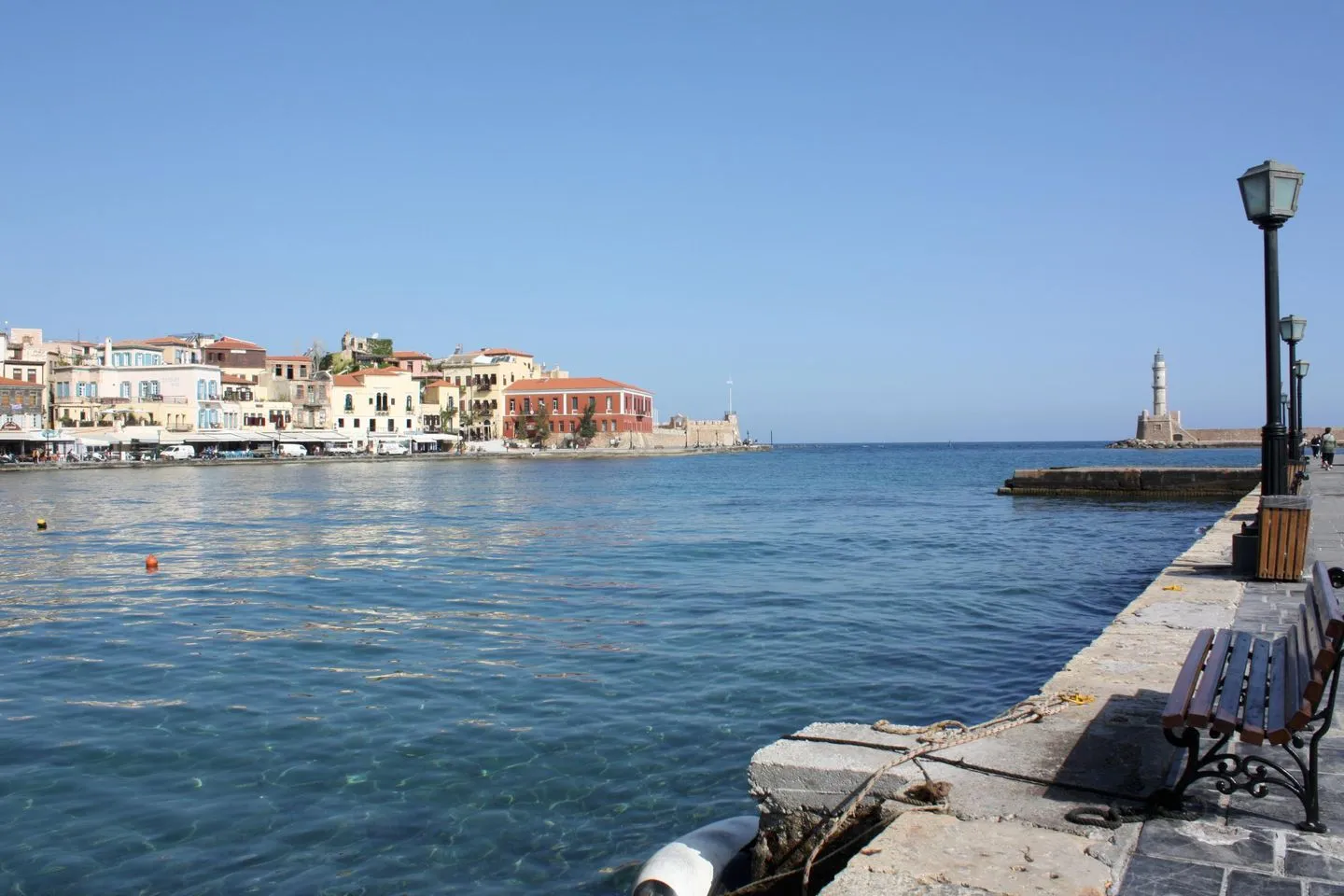
Venetian charm, wild nature, and some of the most beautiful beaches in Crete.
The Chania region in the west of the island of Crete lies between Rethymno to the east, the Cretan Sea to the north and west, and the Libyan Sea (South Cretan Sea) to the south. It is one of the island’s four regional units and includes not only the islands of Gavdos and Gavdopoula, but also Elafonisi, Souda, Prasonisi, and several other small rocky islets close to the coast.
The capital of the region is Chania, with around 160,000 inhabitants. The second-largest town is Souda, known for its port in the deeply indented Souda Bay. Chania is also a popular starting point for hikes through the famous Samaria Gorge.
The Chania region delights visitors with its impressive variety of landscapes: long sandy beaches, secluded bays, rugged mountain scenery, deep gorges, fertile plains with olive groves and citrus plantations, as well as picturesque villages in the hinterland all shape this charming area in western Crete.
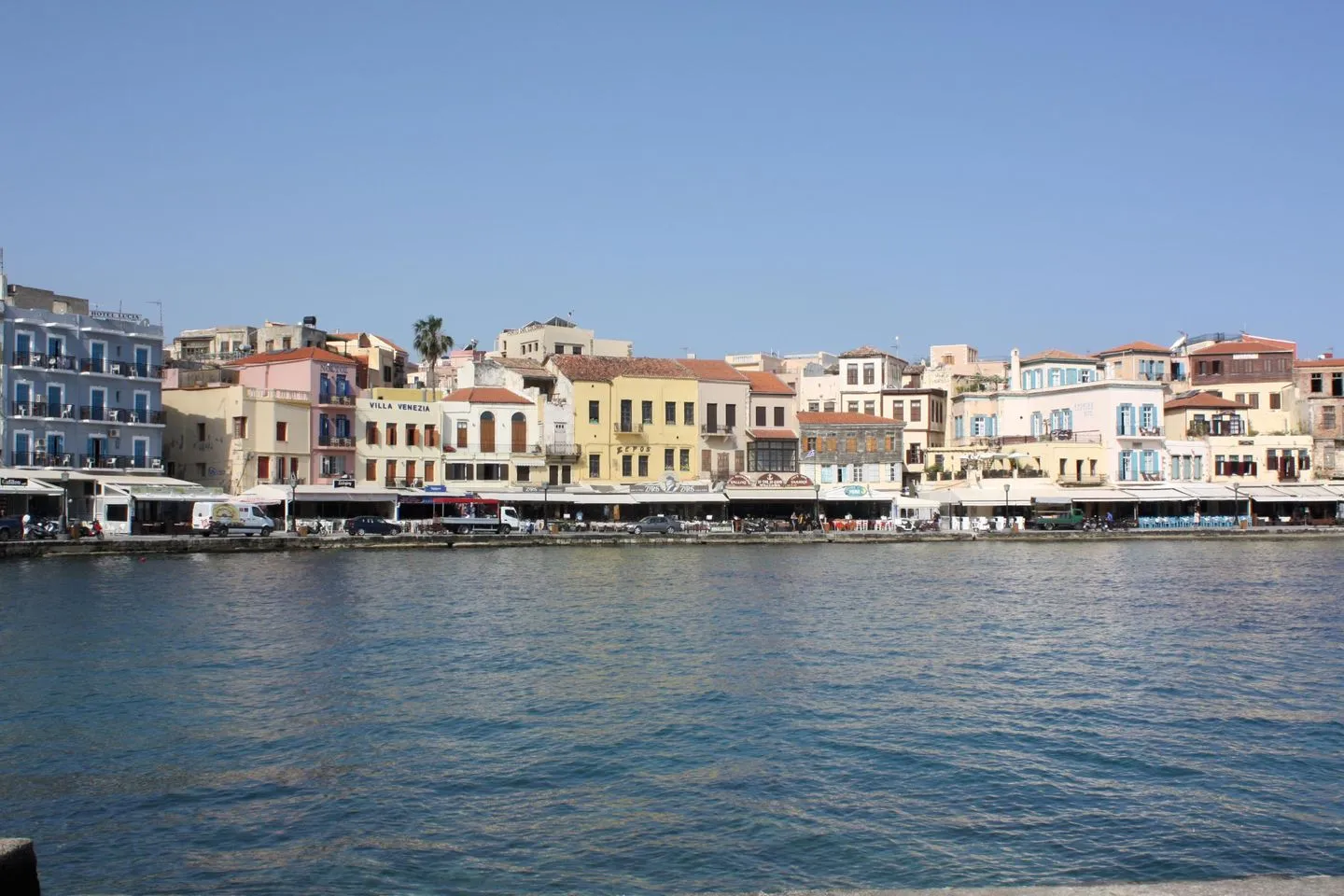
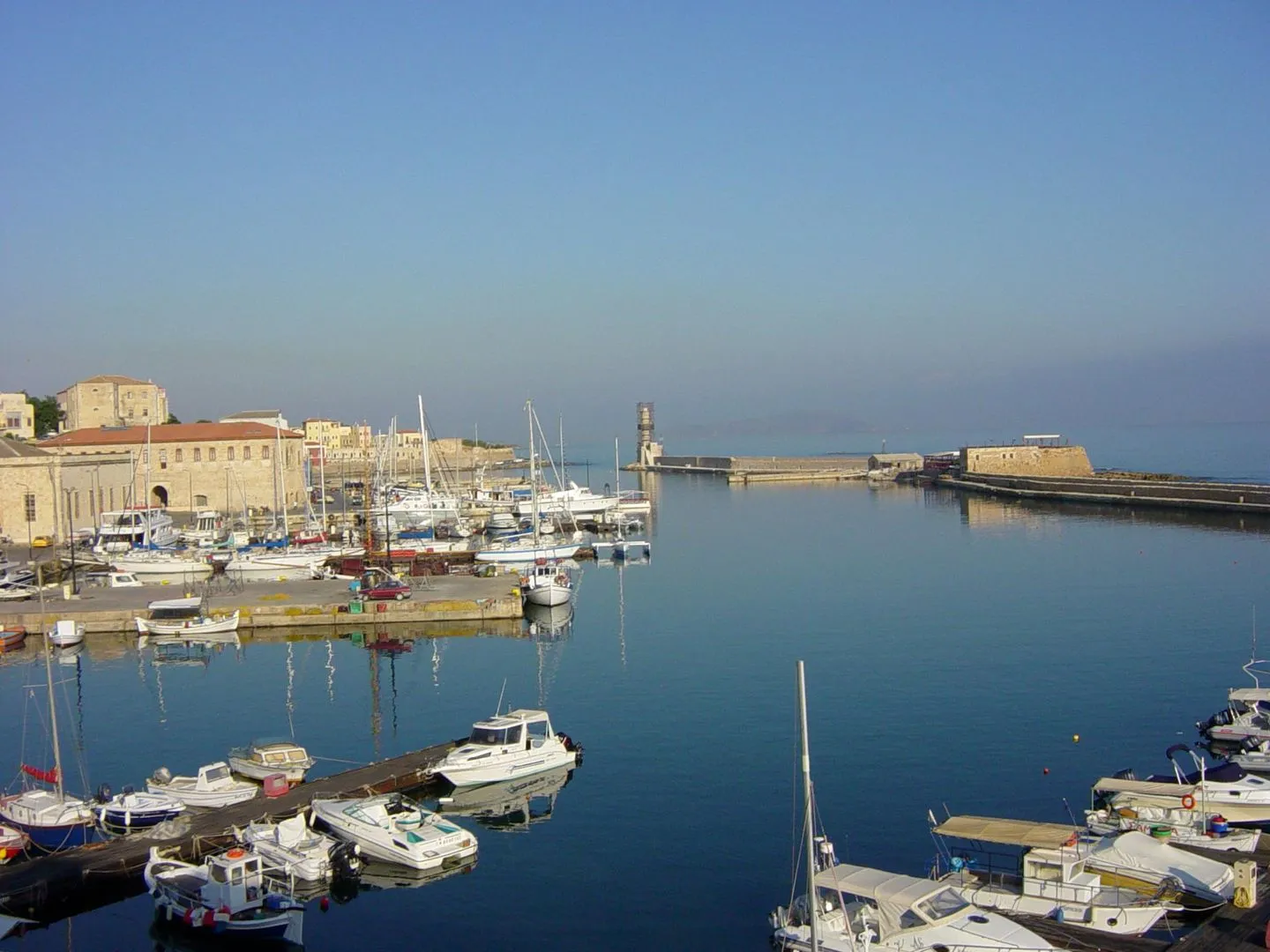
Chania is especially famous for its exotic beaches such as Balos, Falasarna, and Elafonisi, for its historic monasteries on the Akrotiri Peninsula, and for the Venetian-influenced old town of Chania with its picturesque harbor.
Whether you are planning a beach holiday, a hiking trip, or a cultural journey of discovery – the Chania region is one of the most diverse and beautiful areas of Crete.
The Chania region has a coastline of around 350 km and more than 50 beaches. Some of the most exotic beaches in Greece are located here.
The kilometers-long, gently sloping sandy beaches on the northwestern coast – between Chania and Kolymvari, around Aghia Marina, Platanias, Maleme, and Kolymvari, as well as east of Chania near Georgioupoli – offer excellent tourist infrastructure.
On the Akrotiri Peninsula, northeast of Chania, there are sheltered bays with beautiful sandy beaches such as Kalathas and Stavros.
West of Chania and Kolymvari, on the Gramvousa Peninsula, are some of the most famous beaches in Greece. Balos Beach impresses with white-pink sand and a turquoise lagoon. Further south lies the exotic Falasarna Beach, known for its white sand and crystal-clear water.
In the southwest of Chania are Elafonisi and Palaiochora – two of the most remote and beautiful beaches in Crete.
Chania is the economic and cultural center of the region and the second-largest city in Crete. It is located on the northwestern coast and was already inhabited during Minoan times. The Venetians built a fortress and a harbor, leaving a lasting mark on the cityscape.
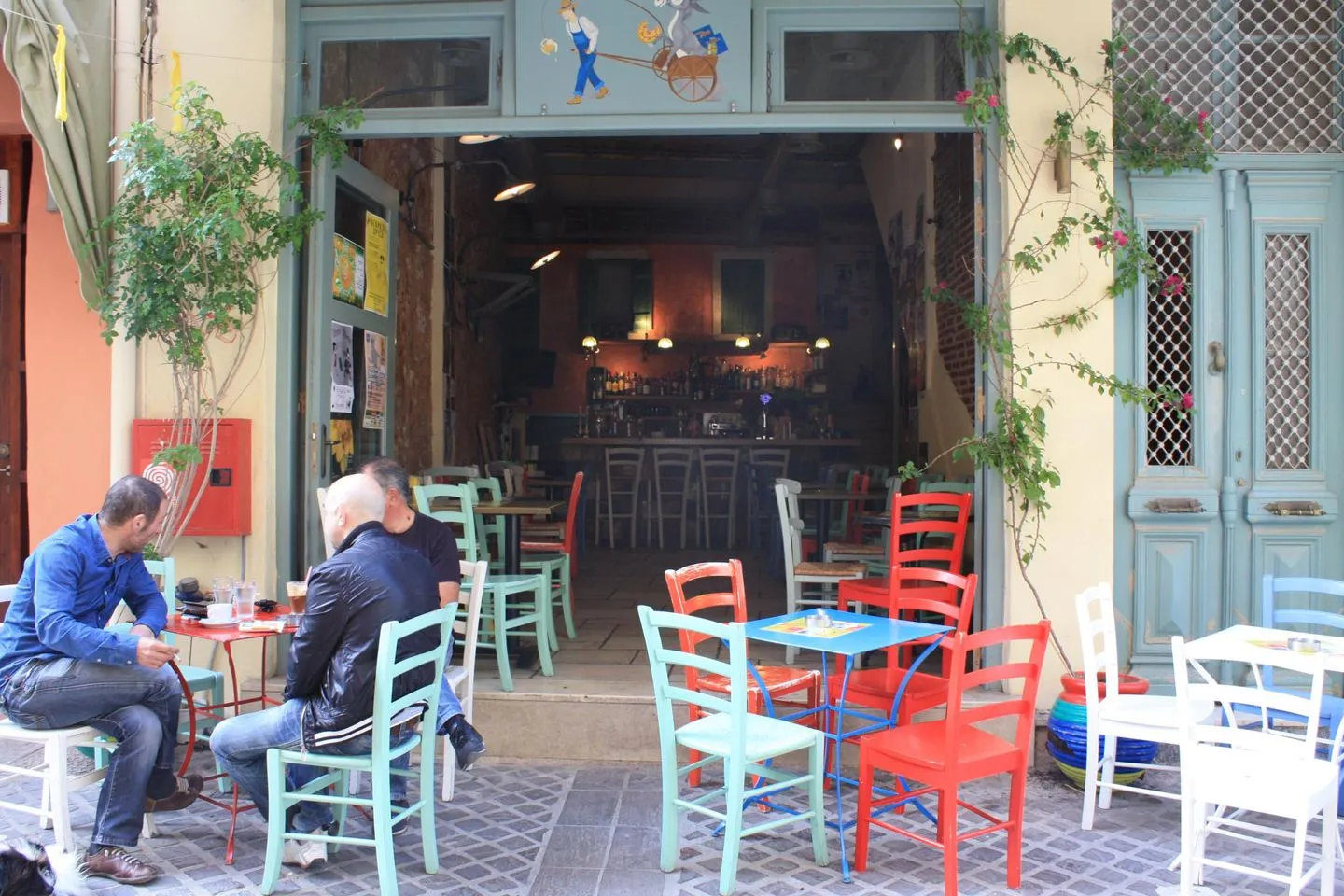
The center of today’s city is the picturesque Venetian harbor, surrounded by a promenade lined with numerous cafés, tavernas, and beautiful building facades. The old town consists of winding alleys, Venetian villas, and small squares – traces of the Romans, Byzantines, Venetians, Franks, and Ottomans are still visible today.
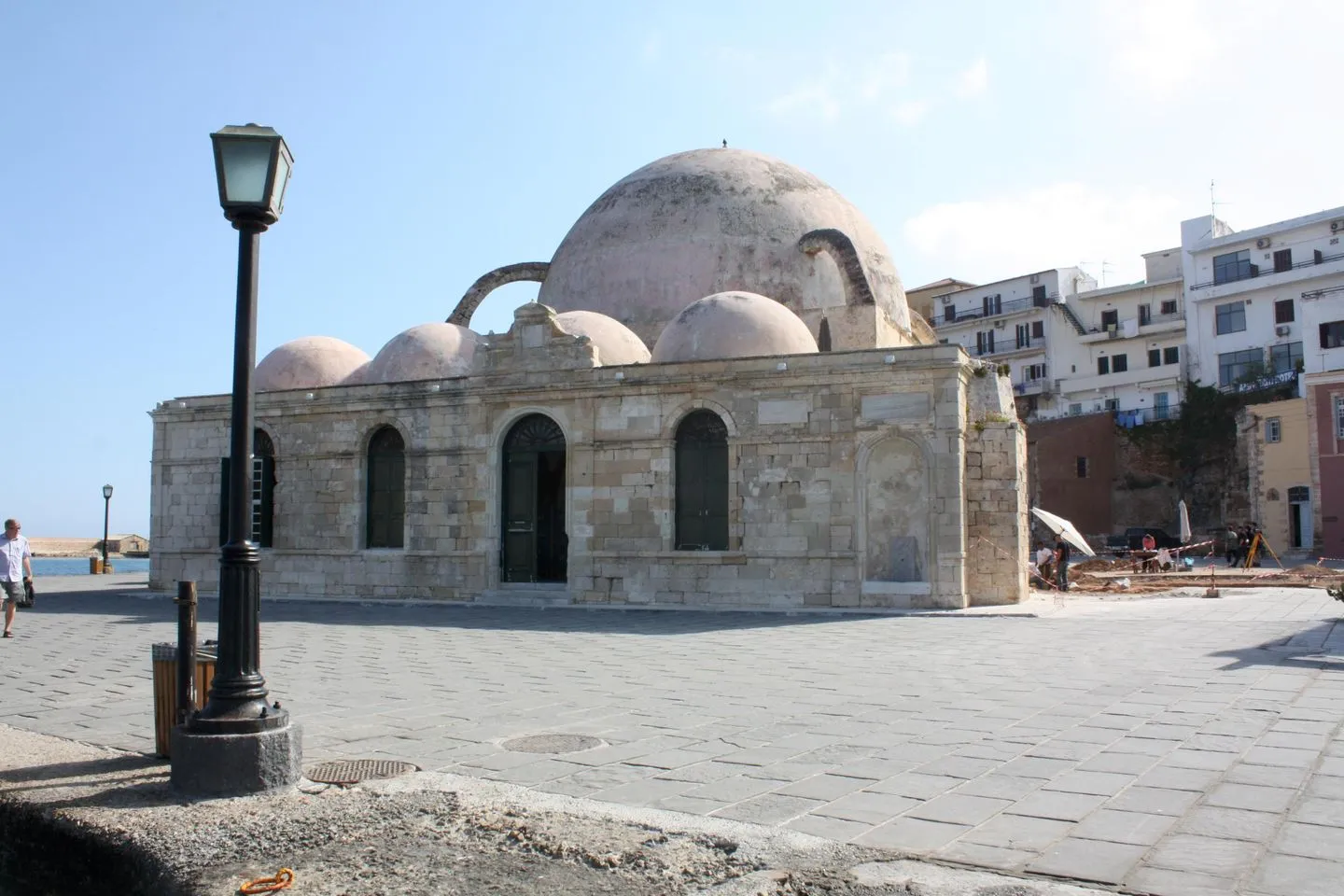
The city is surrounded by Venetian fortification walls. At the harbor, you will find historic warehouses as well as the churches of San Rocco and San Nicola from Venetian times. The former mosque by the harbor now serves as an exhibition space.
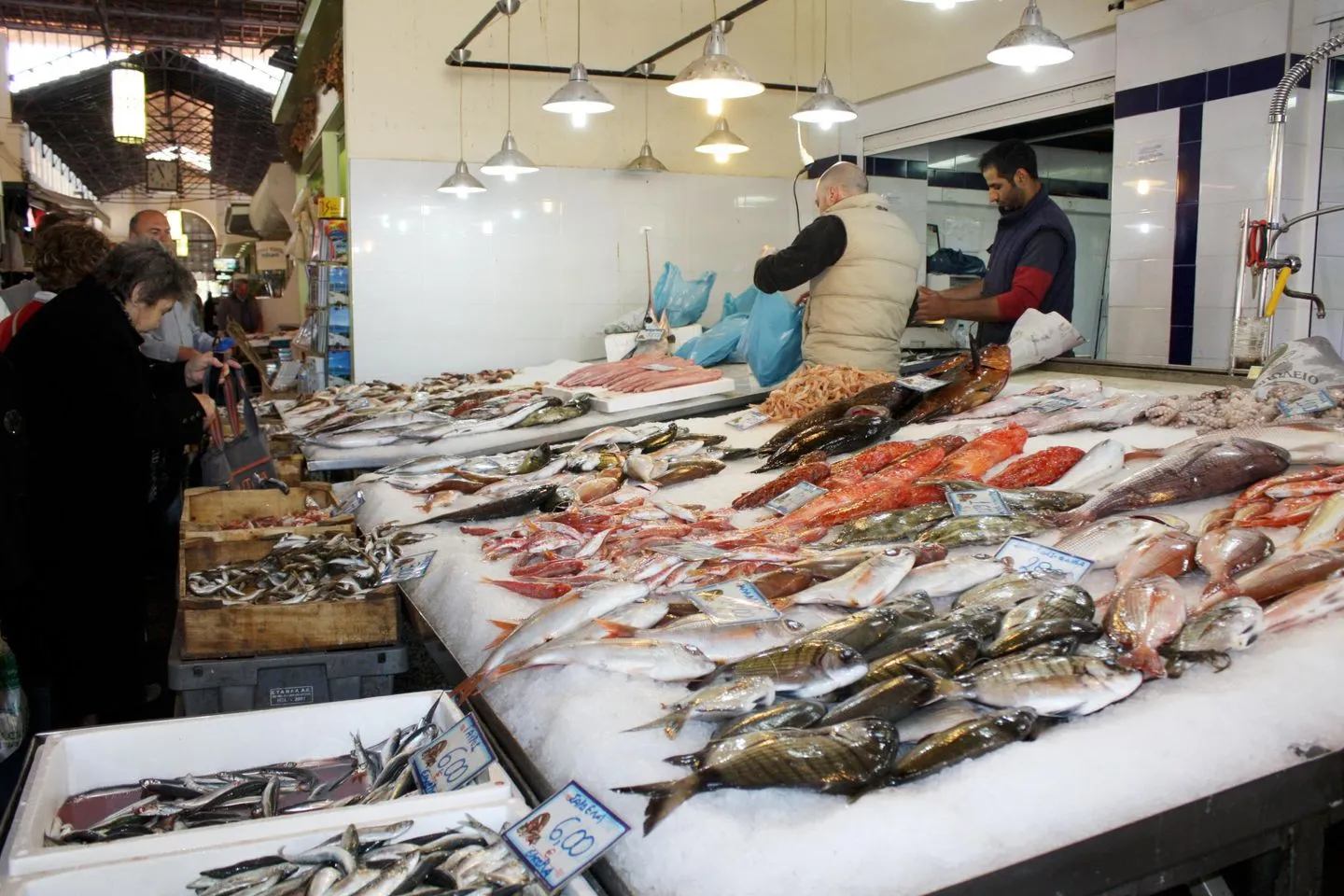
The Chania Market Hall, built after the model of the market halls of Marseille, is a lively shopping market and offers an authentic insight into the Cretan way of life.
The Topanas district west of the harbor, as well as the adjacent Jewish quarter Evraiki Sinikia, have preserved their historic charm to this day. Restored palazzi and villas now house stylish boutique hotels.
From Profitis Ilias Hill above the city, there is a wonderful view over Chania, the coastal plain, and the mountains of western Crete. The graves of the important politicians Eleftherios and Sofoklis Venizelos are also located here.
The Archaeological Museum of Chania is located in the historic district of Chalepa. It is a modern, symbolic building with panoramic views of the old town and the sea.
The permanent collection presents the rich archaeological heritage of the region – from the earliest traces of human presence and prehistoric settlements to historic cities.
North of Chania lies the Akrotiri Peninsula with its sandy bays, small coastal settlements, and Mount Stavros. This is where the film Zorba the Greek was shot in 1964, based on the world-famous novel Alexis Zorbas by Nikos Kazantzakis.
The film music by Mikis Theodorakis – the world-famous “Sirtaki” – made this place even more famous.
Also worth seeing are the monasteries of Aghia Triada, Gouverneto, and Katholiko from the 16th and 17th centuries, beautifully located in the northeast of the peninsula.
Lake Kournas, east of Chania and near the border with the Rethymno region, is surrounded by hills and lies not far from the coast. In winter, it is fed by springs from the mountains, and in summer it partially dries out.
The lake is protected under Natura 2000 and is home to numerous bird species as well as other wildlife. It is one of the most beautiful natural biotopes in western Crete.
Samaria Gorge is considered the most famous gorge in Crete and one of the island’s most impressive natural experiences. It is about 18 km long and leads from around 1,250 m in the White Mountains down to the Libyan Sea.
At its narrowest point, it measures only about 3 m. The hike takes approximately 4 to 6 hours, depending on fitness level and breaks.
Due to snowmelt, the gorge is usually closed until mid-April and is generally open from May 1 to October 31.
Agia Roumeli is a small coastal village on the Libyan Sea and the destination of many hikers who have crossed the Samaria Gorge. From here, boats depart for Loutro and Hora Sfakion.
The ancient site of Tara is located on a hill east of the village. Finds from the site are displayed in the Archaeological Museum of Chania.
Agia Roumeli also has several Byzantine churches such as Panagia, Agia Triada, and Agios Pavlos. After the hike, the beach of Agia Roumeli is an absolute highlight.
Loutro can only be reached by boat from Agia Roumeli or Hora Sfakion. This idyllic, car-free coastal village is one of the most beautiful places on Crete’s south coast and a popular arrival point for many Samaria hikers.
West of Chania and Kissamos stretches the Gramvousa Peninsula with a Venetian fortress and the famous Balos Beach. It is known for its warm water, white to pink-colored sand, and spectacular turquoise lagoon.
During the season, boats depart daily from Kissamos.
Falasarna Beach, around 50 km west of Chania, consists of five beaches separated by dunes and rocks. The most famous is Pachia Ammos – a wide sandy beach with an impressive backdrop and breathtaking sunsets.
Elafonisi is located about 80 km southwest of Chania. The elongated peninsula is separated from the mainland by a shallow channel and enchants visitors with turquoise coves and pink sand.
To the east lies an impressive cedar forest that reaches down to the sea, adding even more character to this extraordinary natural landscape.
Aptera is one of the most important city-states of ancient Crete. The ruins are located about 15 km east of Chania on an elevated site with magnificent views over Souda Bay.
In antiquity, Aptera controlled the ports of Minoa (today’s Marathi) and Kissamos, which brought the city great prosperity.
The remains date from the Minoan, Hellenistic, and Roman periods. The excavations include impressive city walls, Roman cisterns, an ancient theater, and a necropolis.
At present, we do not offer holiday homes or vacation rentals in the Chania region.
Instead, we recommend our accommodations in the Rethymno area – on the north coast near Sfakaki and on the south coast near Triopetra.
Kleiner Hinweis: